
ACCA Course: Eligibility, Subjects, Fees, Duration, Exemptions and Career Opportunities
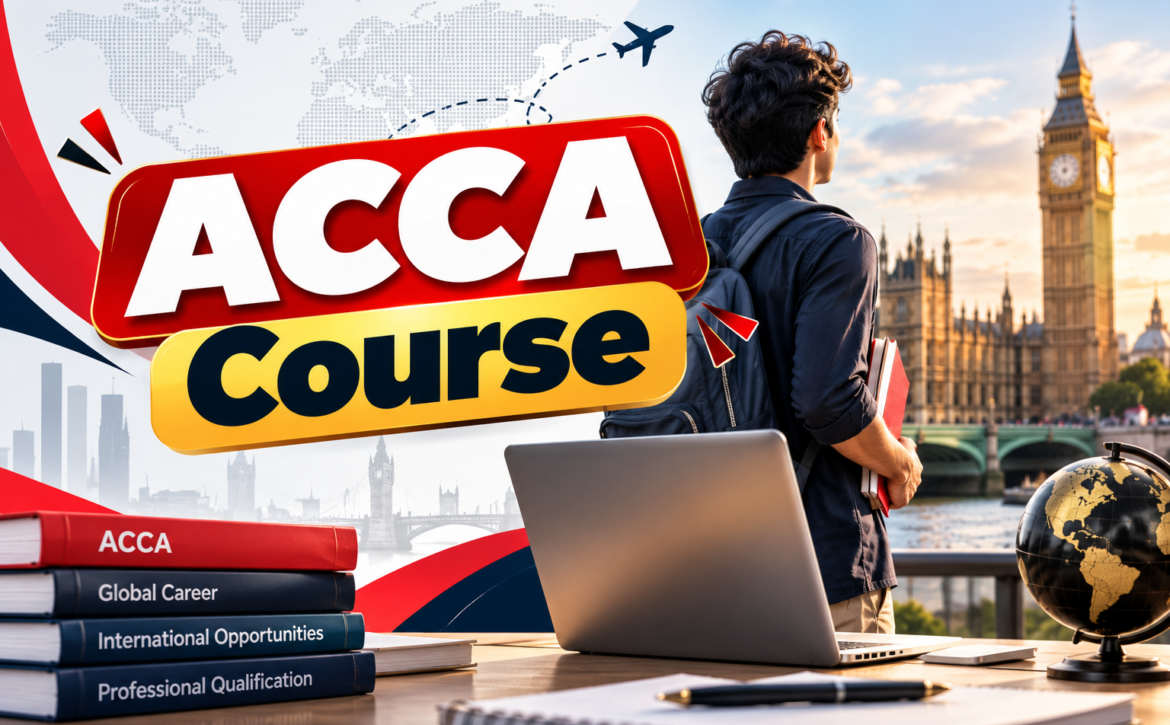
Choosing a professional qualification after Class 12 or graduation is a big decision. Students often compare Chartered Accountancy (CA), ACCA, and other accounting qualifications because they want a career that offers professional growth, financial stability and opportunities beyond a single industry.
The ACCA qualification is worth considering if you are interested in accounting, auditing, taxation, financial reporting or international finance. Offered by the Association of Chartered Certified Accountants, a UK-based professional accountancy body, it is designed to develop the technical knowledge and professional skills required in modern finance roles.
However, there is more to choosing ACCA than knowing that it is an international qualification. You need to understand the entry requirements, examination structure, overall cost, exemptions, practical experience requirements and the type of career you want to build.
For Indian students, another important consideration is how ACCA compares with CA and whether the qualification suits their long-term goals.
This guide explains the ACCA course in detail, including the current qualification structure and the changes planned for 2027, so you can make a more informed decision.
What Is the ACCA Course?
ACCA stands for the Association of Chartered Certified Accountants. It is a global professional accountancy body that offers a qualification focused on accounting, finance, business management, auditing, taxation and strategic decision-making.
The qualification is designed for students who want to develop professional accounting skills and pursue opportunities in different business environments.
Unlike a conventional university degree, ACCA is a professional qualification with examination, ethics and practical experience requirements. Students must satisfy the applicable requirements to become ACCA members.
The qualification is relevant to careers in areas such as:
- Financial accounting and reporting
- Management accounting
- Audit and assurance
- Financial planning and analysis
- Corporate finance
- Risk management and internal controls
- Business consulting
- International financial reporting
ACCA is recognised by employers in many countries, but recognition, job eligibility and professional practice rights depend on the country, employer and nature of the work. It should not automatically be treated as equivalent to every local statutory accountancy licence.
Official information is available on the ACCA Global website.
ACCA Course Eligibility in India
One of the first questions students ask is whether they can pursue ACCA after Class 12, graduation or another professional qualification.
The answer depends on your existing academic qualifications and ACCA’s entry requirements.
Eligibility after Class 12
Students who have completed Class 12 may be eligible to register for the ACCA qualification if their qualifications satisfy the applicable minimum entry criteria.
ACCA assesses qualifications against its entry requirements. Indian students should check the official minimum entrance requirements database rather than relying solely on a percentage mentioned by a coaching provider.
Students who do not meet the minimum entry requirements may be able to start through an appropriate Foundations-level route.
Eligibility after graduation
Graduates in commerce, accounting, finance and related fields may be eligible for exemptions from certain ACCA examinations, depending on their university, programme and subjects studied.
A relevant degree can reduce the number of examinations a student needs to complete. However, graduation does not automatically guarantee exemptions.
Eligibility for CA students and qualified professionals
CA students and qualified professionals may also explore ACCA registration and exemption eligibility based on their existing qualifications.
The exemptions available depend on ACCA’s formal assessment and applicable policies.
| Educational background | What to check |
| Class 12 student | Minimum entry requirements and the appropriate starting level |
| B.Com graduate | Entry eligibility and possible examination exemptions |
| M.Com or finance graduate | Qualification-specific exemption assessment |
| CA student | Existing qualifications and eligibility under ACCA policies |
| Qualified Chartered Accountant | Applicable exemptions and remaining membership requirements |
| Student without the required entry qualifications | Foundations-level route |
Official resource: ACCA Registration and Entry Requirements
Before paying registration fees, check the requirements applicable to your exact qualification.
ACCA Course Structure and Subjects
Under the current ACCA qualification structure, students generally complete up to 13 examinations, the Ethics and Professional Skills Module (EPSM), and the Practical Experience Requirement (PER). Eligible exemptions may reduce the number of examinations required.
The examinations are organised into three levels.
Level 1: Applied Knowledge
This level introduces students to accounting, management and the business environment.
| Paper | Subject |
| BT | Business and Technology |
| MA | Management Accounting |
| FA | Financial Accounting |
Students learn how businesses operate, how financial transactions are recorded and how accounting information supports decision-making.
Level 2: Applied Skills
This level develops technical knowledge across accounting, finance, taxation, law and audit.
| Paper | Subject |
| LW | Corporate and Business Law |
| TX | Taxation |
| FR | Financial Reporting |
| PM | Performance Management |
| FM | Financial Management |
| AA | Audit and Assurance |
These subjects help students understand financial statements, evaluate business performance, assess tax obligations and develop the skills required for audit and finance-related work.
Level 3: Strategic Professional
The final level focuses on advanced technical knowledge, professional judgement and strategic decision-making.
Students complete two essential papers and select two options under the current structure.
| Category | Papers |
| Essential | Strategic Business Reporting (SBR) |
| Essential | Strategic Business Leader (SBL) |
| Options — choose two | Advanced Financial Management (AFM) |
| Options — choose two | Advanced Audit and Assurance (AAA) |
| Options — choose two | Advanced Taxation (ATX) |
| Options — choose two | Advanced Performance Management (APM) |
Students should select optional papers based on their strengths and intended career path. For example, someone interested in audit may prefer a different combination from someone targeting corporate finance.
Important: ACCA has announced a redesigned qualification for 2027. The subject structure above describes the current qualification, not the complete structure that will apply to every student after the transition. Check the official transition guidance before planning your examinations.
Official reference: ACCA Qualification Structure
How Long Does It Take to Complete ACCA?
The duration of the ACCA course depends on your starting point, exemptions, examination performance and study schedule.
Students who begin after Class 12 may take several years to complete the examinations and practical experience requirements. Graduates with relevant exemptions may have fewer examinations to complete.
ACCA’s qualification requirements are not limited to passing examinations. Students must also complete the applicable ethics and professional skills component and the practical experience requirement.
The qualification generally requires at least 36 months of relevant supervised practical experience under the current structure.
| Student profile | Factors affecting duration |
| After Class 12 | Number of exams, study pace and practical experience |
| Commerce graduate | Eligibility and available exemptions |
| Working professional | Workload and available study hours |
| Student with relevant exemptions | Remaining examinations and other qualification requirements |
| Student preparing alongside another course | Time management and examination scheduling |
ACCA examinations are offered through a combination of on-demand and session-based formats, depending on the paper.
A realistic plan is better than choosing an ambitious completion date without considering your college schedule, work commitments or preparation level.
ACCA Course Fees in India
The total ACCA course cost is an important consideration for Indian students and their families.
There is no single total fee that applies to every student. Your overall expenditure depends on registration, annual subscriptions, examination entry, exemptions, learning materials and tuition, if you choose coaching.
The fees may also change over time, and the applicable amount can depend on when you register or enter an examination.
Main components of ACCA fees
| Fee component | What it covers |
| Initial registration | Registering as an ACCA student |
| Annual subscription | Maintaining active student status |
| Examination fees | Entering the relevant examination |
| Exemption fees | Fees for examinations formally exempted |
| Tuition fees | Coaching or classes, if selected |
| Study resources | Books, mock exams or additional learning materials |
Some students focus only on coaching fees and underestimate the examination-related costs. Others calculate only the registration and examination fees without budgeting for preparation resources.
A better approach is to prepare a complete budget before starting.
How to check the latest ACCA fees
Visit the official ACCA Fees and Charges page for India.
Check the current registration, subscription, examination and exemption fees. Also confirm the applicable examination entry deadline, because fee levels may vary according to the entry period.
When comparing tuition providers, ask whether the quoted fee covers all papers, revision classes, mock tests and access to study resources. A lower initial price does not always mean a lower overall cost.
ACCA Exemptions: Can You Skip Some Exams?
Yes, eligible students may receive exemptions from certain ACCA examinations based on relevant prior learning.
Exemptions allow students to avoid repeating subjects in which their existing qualifications have already demonstrated the required knowledge.
Under the current qualification, exemptions may be available for Applied Knowledge and Applied Skills examinations. No exemptions are awarded from the Strategic Professional examinations.
A maximum of nine examinations may be exempted under the current framework, subject to ACCA’s assessment and policies.
How to check your exemptions
- Visit the official ACCA website.
- Open the exemptions calculator.
- Select your institution, qualification and relevant details.
- Review the indicative exemptions available.
- Submit the required academic documentation during registration or through the applicable process.
- Wait for ACCA to assess and confirm your eligibility.
An indicative result is not the same as a formally awarded exemption. ACCA must assess your qualifications and supporting documents.
Official resource: ACCA Exemptions Information
Students should compare the value of an exemption against the cost and their confidence in the underlying subject. Even if an exemption is available, reviewing the concepts may be useful before moving to more advanced papers.
Ethics and Practical Experience Requirements
Passing examinations is only one part of becoming an ACCA member.
Ethics and Professional Skills Module
Under the current structure, students must complete the Ethics and Professional Skills Module. It develops professional judgement, communication, ethical decision-making and business-related skills.
These capabilities are important because accountants often deal with confidential information, financial risks, reporting decisions and competing business interests.
Students should confirm the applicable deadline and transition rules if they are approaching the 2027 qualification changes.
Practical Experience Requirement
The current Practical Experience Requirement generally involves:
- At least 36 months of relevant practical experience.
- Achievement of the required performance objectives.
- Supervision and sign-off by an appropriate practical experience supervisor.
Relevant work experience can be gained in suitable accounting and finance roles, subject to ACCA’s requirements.
This means students do not necessarily have to wait until every examination has been completed before gaining experience. Planning work and study together can help them develop practical skills while progressing through the qualification.
Official resource: ACCA Practical Experience Requirement
ACCA vs CA: Which Qualification Should You Choose?
Both ACCA and Chartered Accountancy can lead to rewarding careers, but they serve different professional goals.
CA is particularly relevant for students who want to develop a career within India’s accounting, audit, taxation and regulatory environment. ACCA may be attractive to students interested in international financial reporting, multinational businesses and cross-border finance opportunities.
Neither qualification guarantees a job or a particular salary. Career outcomes depend on skills, experience, location, employer requirements and professional credentials.
| Comparison | ACCA | CA in India |
| Main professional focus | International accounting and finance | Indian accounting, taxation, audit and related professional practice |
| Course authority | ACCA | ICAI |
| Study structure | Professional examinations, ethics and experience | ICAI examinations, prescribed training and other applicable requirements |
| Taxation focus | Relevant tax variants and qualification requirements | Strong focus on Indian tax law and related requirements |
| International career relevance | Designed for an international accountancy career | Can also support international opportunities, depending on role and jurisdiction |
| Statutory practice rights | Depends on local laws and additional requirements | Governed by Indian law and applicable professional regulations |
| Best suited for | Students targeting international finance and accounting roles | Students targeting Indian CA practice and related careers |
The choice should depend on the kind of work you want to do, the country where you plan to work and the investment you are prepared to make.
If you intend to practise as a statutory auditor in India, do not assume that ACCA membership alone provides the same legal rights as ICAI membership. Check the applicable regulatory requirements.
Career Opportunities After ACCA
The ACCA qualification can support careers across accounting, corporate finance, reporting, audit, business analysis and management.
However, the roles available to you depend on your completed qualification stage, experience, technical ability and the employer’s requirements.
Common career paths
Financial Accountant: Prepares and reviews financial records and financial statements.
Management Accountant: Helps organisations understand costs, budgets, margins and operational performance.
Financial Planning and Analysis Analyst: Supports budgeting, forecasting and business decision-making.
Audit Professional: Works on audit procedures, controls, financial information and assurance assignments, subject to relevant regulatory requirements.
Tax Analyst: Assists with tax calculations, compliance and research within the applicable jurisdiction.
Risk and Compliance Professional: Helps organisations assess financial, operational and regulatory risks.
Finance Business Partner: Works with business teams to interpret financial performance and support commercial decisions.
Industries that recruit accounting professionals
| Industry | Potential areas of work |
| Accounting and consulting firms | Audit, reporting, advisory and compliance |
| Multinational companies | Financial reporting and regional finance |
| Banking and financial services | Financial control, reporting and risk |
| Technology companies | Revenue accounting and financial analysis |
| Manufacturing and retail | Cost accounting, budgeting and business finance |
| Shared service centres | Accounting operations and financial reporting |
ACCA can be a useful professional credential, but students should also develop Excel, financial modelling, communication, data analysis and relevant accounting software skills.
Is ACCA Worth It for Indian Students?
ACCA may be a good investment if your professional goals align with the qualification and you are comfortable with the overall cost and study commitment.
It can be particularly relevant if you want to work in international finance teams, multinational companies or roles involving international accounting standards.
However, it is not automatically the best choice for everyone.
Before registering, ask yourself three questions:
- Do I want to build a career in international finance or primarily in Indian statutory practice?
- Can I manage the examination, subscription and tuition costs?
- Am I prepared to develop practical skills alongside theoretical knowledge?
If your goal is Indian CA practice, compare ACCA with the ICAI qualification carefully. If your goal is international accounting, examine the job requirements in your target country and identify whether ACCA is valued by the employers you want to approach.
Students should also avoid choosing a qualification solely because someone promises a high salary. A professional course works best when it fits your long-term career plan.
Important ACCA Qualification Changes Planned for 2027
ACCA has announced a redesigned qualification intended to strengthen employability, incorporate technology and sustainability, and recognise achievement through updated awards and modules.
The transition is planned in stages during 2027.
According to ACCA’s published timeline:
- The final sitting of the current Applied Skills and Strategic Professional examinations is scheduled for June 2027.
- The redesigned Foundations and Knowledge examinations are scheduled to become available from July 2027.
- The first session-based examinations under the redesigned Expertise and Strategic Professional levels are scheduled for September 2027.
The redesigned qualification introduces new levels, employability modules and changes to the examination structure.
Existing students should not assume that they need to restart the course. ACCA has published transition guidance explaining how completed elements and exemptions will be treated.
Before planning an examination attempt, check the transition rules applicable to your current level and completed papers.
Official resources:
These resources should be checked regularly because implementation details and transition instructions may be updated.
How CAMentoringProgram.org Can Support Your CA and Accounting Journey
Choosing a professional qualification is only the beginning. Students also need a study plan, regular revision and a clear understanding of the skills employers expect.
CAMentoringProgram.org can be explored for CA-related learning and mentoring resources that may complement your wider accounting preparation.
If you are comparing ACCA with CA, first identify your preferred career path. Then review the relevant syllabus, entry requirements, costs and practical experience expectations. A structured preparation plan can help you avoid studying without a clear target.
For ACCA-specific registration, examination and membership rules, always use the official ACCA website. For ICAI course requirements and Indian CA examination guidance, consult ICAI’s official resources.
The goal is not simply to complete a qualification. It is to build the knowledge, professional judgement and practical skills needed to perform well in a finance career.
Conclusion
The ACCA course offers a structured route into professional accounting and finance, with a focus on technical knowledge, professional skills and relevant work experience.
For Indian students, the right starting point is to understand eligibility, compare available exemptions, calculate the total cost and choose a study schedule that fits their circumstances. Career opportunities may extend across financial reporting, audit, management accounting, business analysis and corporate finance, depending on experience and employer requirements.
The qualification is also evolving, with a redesigned structure planned for 2027. Students should use ACCA’s official transition guidance to understand how the changes affect their examination plans.
Ultimately, ACCA is worth considering when it supports your intended career path and you are ready to invest in both learning and practical development.