
ICAI Updates - CA Mentoring Program - Page 2

Category: ICAI Updates

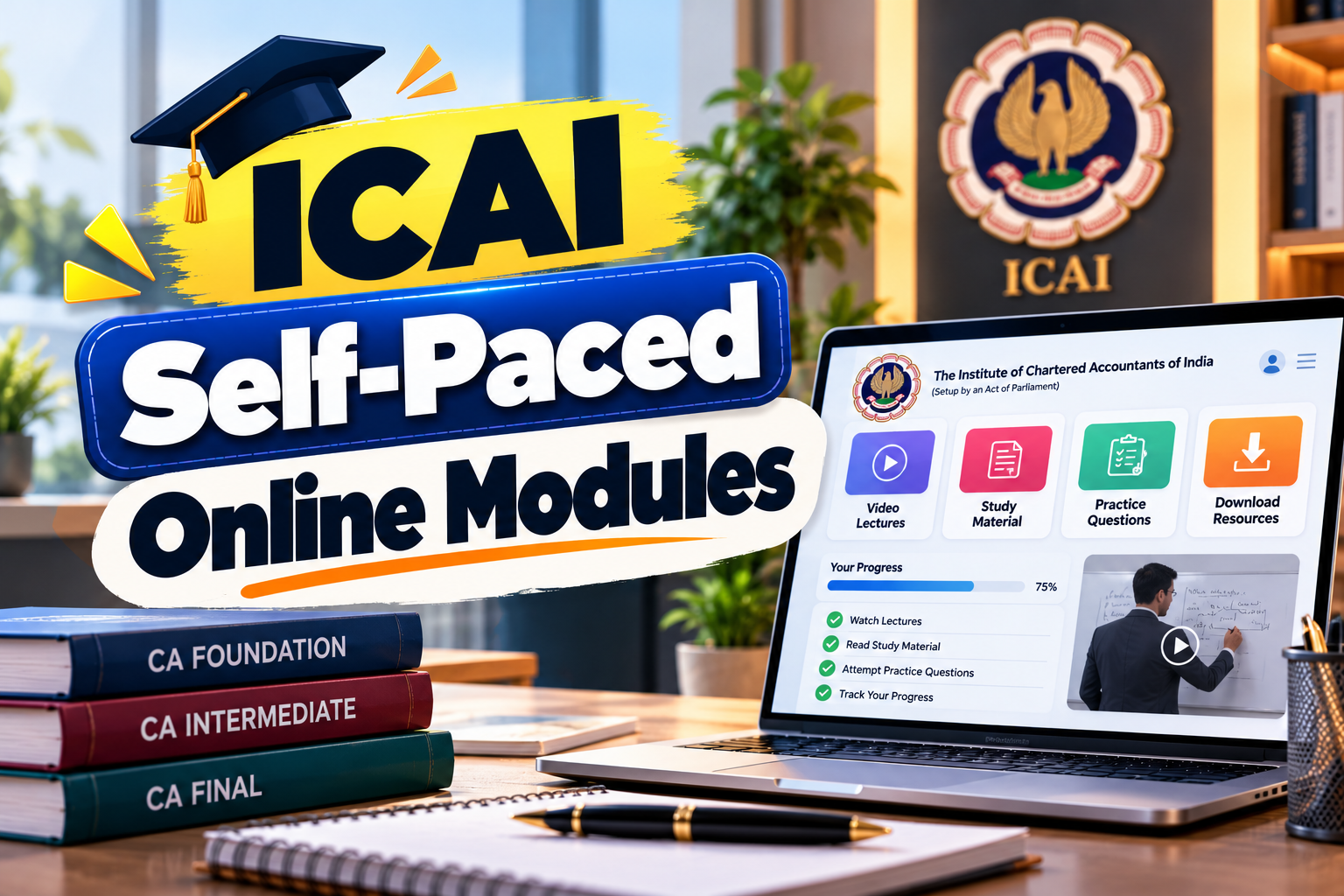
ICAI Self-Paced Online Modules (SPOM): Subjects, Eligibility, Registration, Exam Pattern and Preparation Tips

Preparing for the CA Final examination involves more than completing the main subjects. Students also need to understand the additional learning requirements introduced under ICAI’s New Scheme of Education and Training. One important part of this scheme is the ICAI Self-Paced Online Modules (SPOM).

Many CA students have similar questions about SPOM. Which subjects are compulsory? How many learning hours are required? Can students choose their own subjects? Is there a separate fee? And does completing the online lectures mean that the requirement is fulfilled?

These questions matter because a student may complete most of the CA Final syllabus but still need to meet the applicable SPOM requirements before becoming eligible for the relevant examination or membership, depending on the student’s circumstances and the rules applicable to their batch.

This guide explains the ICAI Self-Paced Online Modules, their subjects, learning hours, registration process, examination pattern and preparation strategy. It also includes official ICAI resources so students can verify the latest requirements before making an exam plan.

What Are ICAI Self-Paced Online Modules?

Self-Paced Online Modules, commonly called SPOM, are structured learning modules introduced by the Institute of Chartered Accountants of India (ICAI) under the New Scheme of Education and Training.

The modules allow eligible students to study specific subjects through ICAI’s digital learning platform at their own pace. Students can access the prescribed learning material, follow video lectures where available, monitor their progress and complete the required learning hours.

SPOM is designed to broaden students’ knowledge beyond the traditional examination subjects. The modules cover areas such as corporate and economic laws, strategic cost management, risk management, international taxation, valuation, entrepreneurship and digital controls.

However, completing the prescribed learning hours and qualifying the SPOM examination are separate requirements. Students should check both before considering a module complete.

Official resources:

ICAI SPOM Subjects: Understanding SET A, B, C and D

SPOM is divided into four sets. SET A and SET B are the core mandatory modules under the scheme, while SET C and SET D offer choices among specialised and multidisciplinary subjects. The exact requirements applicable to an individual student should be confirmed through the latest ICAI rules and exemption notifications.

Overview of SPOM Sets

SPOM Set Subject or category Selection requirement Prescribed learning hours
SET A Corporate and Economic Laws Mandatory, subject to applicable exemptions 40 hours
SET B Strategic Cost & Performance Management Mandatory, subject to applicable exemptions 40 hours
SET C One elective subject Choose one, subject to applicable rules Generally 20 hours
SET D One multidisciplinary subject Choose one, subject to applicable rules Generally 20 hours

The hours shown above reflect ICAI’s published SPOM framework. Students should verify the latest applicable instructions for their examination cycle before planning their completion dates.

SET A: Corporate and Economic Laws

SET A focuses on corporate and economic laws. It includes important areas of company law, securities laws and economic legislation.

The material covers topics such as the appointment and qualification of directors, managerial personnel, board meetings, investigation, mergers and arrangements, prevention of oppression and mismanagement, winding up, securities regulations, foreign exchange law and insolvency-related legislation.

For students preparing for CA Final, these subjects are relevant because professional assignments frequently involve interpreting legal provisions, assessing regulatory compliance and understanding corporate transactions.

How to prepare: Read the relevant ICAI material carefully, identify important legal provisions, and make short revision notes for concepts that are difficult to recall. Since amendments can affect legal answers, always use the study material applicable to your examination.

Official resource: ICAI SET A study material and updates

SET B: Strategic Cost & Performance Management

SET B covers strategic cost management and performance management. It aims to develop a deeper understanding of how organisations analyse costs, evaluate performance and make business decisions.

Topics include the modern business environment, lean systems, specialist cost management techniques, strategic revenue and profit management, performance measures, transfer pricing, standard costing and case studies.

This module can help students connect technical concepts with practical business situations. Rather than treating every topic as an isolated theory, students should try to understand how cost information supports planning, pricing, resource allocation and performance evaluation.

How to prepare: Maintain a separate list of key concepts and formulas, revise the logic behind each technique, and practise applying the concepts to examples. Do not rely exclusively on memorising definitions.

Official resource: ICAI SPOM module resources

SET C: Elective Subjects

SET C offers specialised subjects. Students generally select one subject from the available options, subject to the applicable ICAI requirements.

SET C subject Main area of learning
Risk Management Identifying, assessing and managing business risks
Sustainable Development and Sustainability Reporting Sustainability practices, reporting and related frameworks
Public Finance and Government Accounting Public expenditure, government finance and accounting
The Insolvency and Bankruptcy Code, 2016 Insolvency processes and the legal framework
International Taxation Cross-border taxation and international tax principles
The Arbitration and Conciliation Act, 1996 Alternative dispute resolution and arbitration
Forensic Accounting Investigating financial irregularities and analysing evidence
Valuation Assessing the value of businesses and financial interests
Financial Services and Capital Markets Financial products, services and capital markets
Forex and Treasury Management Foreign exchange and treasury operations

The available material and subject options should be checked on ICAI’s official website for the relevant examination cycle.

Choosing a subject purely because another student says it is easy may not be the best decision. Your existing knowledge, interest in the subject, familiarity with the terminology and available preparation time should all be considered.

For example, a student interested in corporate transactions may find valuation or insolvency interesting. Someone curious about financial markets may prefer Financial Services and Capital Markets. These are examples of personal fit, not guarantees that one subject will be easier than another.

Official resource: ICAI SET C subjects and updates

SET D: Multidisciplinary Subjects

SET D introduces students to areas beyond the conventional accounting and taxation syllabus. It is intended to encourage a broader understanding of professional and business environments.

SET D subject What students explore
The Constitution of India & Art of Advocacy Constitutional foundations and advocacy skills
Psychology & Philosophy Human behaviour, reasoning and philosophical perspectives
Entrepreneurship & Start-up Ecosystem Business creation, innovation and the start-up environment
Digital Ecosystem and Controls Digital systems, technology-related processes and controls

A CA professional may work with business owners, technology teams, management and regulators. A broader perspective can help students understand different business situations and communicate more effectively.

When selecting a SET D subject, review the official syllabus, sample material and learning content first. A familiar topic can be a sensible choice, but it is still important to understand the scope and assessment requirements.

Official resource: ICAI Self-Paced Online Modules

Who Is Eligible for ICAI SPOM?

SPOM is associated with ICAI’s New Scheme of Education and Training. ICAI’s published guidance states that students registered for the Final Course can access the modules through the digital learning platform.

However, access to learning material and eligibility for a particular SPOM test are not necessarily the same thing. Exemptions and transition provisions may also depend on a student’s examination history, course status and the rules applicable to a particular attempt.

Before beginning, students should check:

  • Whether their CA Final registration and student records are in order.
  • Which SPOM sets they are required to complete.
  • Whether any exemption applies to their case.
  • Which syllabus and amendments are relevant to their examination.
  • Whether the prescribed learning hours have been completed and recorded.

Students following an earlier scheme or transition arrangement should not assume that the requirements applicable to a friend or classmate are identical to theirs.

For confirmation, use the official ICAI SPOM page and the applicable examination announcements. If your circumstances are unusual, seek clarification from ICAI rather than relying solely on informal online discussions.

How to Register for ICAI Self-Paced Online Modules

Students can access SPOM through ICAI’s Digital Learning Campus. The following process provides a practical starting point; portal instructions may change, so follow the latest directions displayed by ICAI.

Step 1: Open the ICAI Digital Learning Campus

Visit https://lms.icai.org/login. Make sure you are using the official ICAI portal rather than an unofficial website offering similar-looking courses.

Step 2: Sign In Using an Available Login Method

ICAI has provided login options that include OTP-based access through the mobile number registered with the Self-Service Portal (SSP) and signing in with SSP credentials. Use the method currently offered on the portal.

If your registered mobile number or profile details are incorrect, resolve the issue through the appropriate ICAI service before proceeding.

Step 3: Open the SPOM Section

After logging in, locate the Self-Paced Online Modules section. Review the sets and subjects displayed on your dashboard.

Check the prescribed subjects applicable to you instead of assuming that all four sets have identical selection requirements.

Step 4: Complete the Prescribed Learning Hours

Study the available learning material and complete the required hours for each applicable set. ICAI’s learning platform provides progress information so students can monitor their completion status.

Do not treat watching a few selected videos as proof that the prescribed hours have been fulfilled. Confirm the status recorded on the official dashboard.

Step 5: Verify Completion Before Booking a Test

Once you have completed the applicable learning requirements, check your dashboard and the examination portal for the next steps.

The ICAI Self-Paced Module Test portal is used for registration and booking for SPOM tests. Follow the current instructions for available centres, dates, documents and fees.

ICAI SPOM Exam Pattern and Passing Criteria

Completing SPOM learning hours does not, by itself, mean that the student has qualified the module. Students must also meet the applicable test requirement unless an official exemption applies.

ICAI’s published SPOM FAQs state a minimum qualifying score of 50% in a module, with no negative marking under the described framework. Since examination instructions can be updated, check the current rules before your test.

Exam-related point What students should know
Learning requirement Complete the prescribed hours for the applicable module
Test registration Follow instructions on the official SPMT portal
Passing requirement ICAI’s published FAQ states a minimum of 50%
Negative marking The published FAQ states there is no negative marking
Final exam marks SPOM marks are not added to CA Final examination marks
Attempts Refer to the latest ICAI rules for applicable attempt provisions
Exemptions Depend on the official criteria relevant to the student’s case

Important: The table summarises the published framework and should not replace the current examination announcement. Always confirm the test-specific instructions before booking.

Official reference: ICAI SPOM FAQs and learning guidance

Is the SPOM Examination Conducted Online?

The learning modules are accessed online. However, students should not assume that the test itself can be taken from home simply because the learning is online.

ICAI introduced a separate Self-Paced Module Test portal for candidates who have completed the required learning hours. The test announcement describes test-centre arrangements and registration through the SPMT portal.

Check the latest announcement for your chosen date, available test centre and booking requirements:

ICAI Self-Paced Module Test portal

Is There a Separate Fee for ICAI SPOM?

ICAI’s published announcements state that no separate fee is payable for accessing the Self-Paced Online Modules on the learning platform.

However, students should distinguish between access to the learning material and the process for registering for the examination. Check the current SPMT portal and applicable ICAI announcements for any test-related charges or updated conditions before booking.

Avoid making payments through unofficial websites or agents claiming that they can guarantee SPOM qualification.

How to Prepare for ICAI SPOM Exams Effectively

The flexible nature of SPOM is helpful, but flexibility can also make it easy to postpone studying. A simple routine can prevent the learning hours from becoming a last-minute burden.

1. Check Your Requirements First

Before creating a timetable, identify the sets you need to complete and confirm whether any exemption applies. This prevents you from spending time planning for a module that may not be required in your case.

2. Make a Realistic Learning Schedule

Break the prescribed hours into manageable sessions. For instance, a student with several weeks available may choose to study for one or two focused hours on suitable days, depending on other commitments.

The purpose is to build a routine that you can maintain alongside articleship, work or CA Final preparation.

3. Take Notes While Studying

Do not simply let the lectures play in the background. Write short notes on important provisions, concepts, definitions and examples. For technical subjects, record the reasoning behind a concept rather than copying long paragraphs.

4. Revise the Difficult Topics

Some subjects may feel familiar at first but become harder when you revisit them. Keep a list of confusing topics and review them before attempting the test.

For SET A, this may involve legal provisions and their application. For SET B, it may mean understanding strategic cost and performance management techniques. Your revision method should suit the subject.

5. Use Official Study Material

The ICAI website provides subject-specific SPOM material and relevant updates. Use the version applicable to your exam cycle, especially where amendments or updated content have been published.

Useful starting points:

6. Track Progress on the Dashboard

Check whether your learning progress is being recorded correctly. If the dashboard does not reflect your activity as expected, review the portal’s instructions and contact the appropriate ICAI support channel before leaving the issue until the last moment.

7. Keep Time for Test Preparation

Completing the learning hours is one part of the process; preparing to answer questions is another. Once you have finished the learning requirement, set aside time to revise the material and understand the test instructions.

Do not book a test solely because the dashboard shows completion if you have not reviewed the subject or confirmed your readiness.

Common Mistakes CA Students Should Avoid

Students can save time and avoid unnecessary stress by paying attention to a few common mistakes.

Assuming all students have the same requirements: Exemptions and transition rules can differ. Confirm your own status.

Confusing learning completion with qualification: Check both the prescribed hours and the applicable test requirement.

Choosing an elective without reviewing the syllabus: Read the official outline before making your selection.

Using outdated study material: Amendments and updated modules can affect the relevant content. Check ICAI’s current resources.

Leaving the module until the last minute: SPOM should be planned alongside the broader CA Final preparation schedule.

Relying on unofficial claims: No coaching provider or website should be treated as the final authority on eligibility, exemptions or examination rules. ICAI’s official announcements take priority.

How CA Mentoring Program Can Support Your CA Preparation

Understanding ICAI SPOM requirements is one part of planning the CA journey. Students also need to manage their main subjects, revision cycles, mock tests and time commitments.

At CA Mentoring Program, students can explore resources related to CA preparation and study planning. Use these resources to build a more organised routine, identify areas that need revision and manage your preparation alongside other course requirements.

A practical study plan should be based on your current progress, available hours and exam timeline. If you are balancing articleship with CA Final preparation, divide your weekly schedule into realistic blocks instead of trying to study every subject intensively every day.

Keep official ICAI notifications as your reference for SPOM eligibility, syllabus, learning-hour requirements, test booking and exemptions. Mentoring and study resources can support your preparation, but they should not replace the Institute’s official instructions.

Final Thoughts

ICAI Self-Paced Online Modules are an important part of the New Scheme of Education and Training for students to whom the requirements apply. Understanding the four sets, completing the prescribed learning hours and following the test process can help students manage this responsibility without unnecessary confusion.

The best approach is straightforward: verify your applicable requirements, select the correct subjects, study through the official learning platform, track your progress and prepare for the test well in advance. Most importantly, confirm the latest ICAI announcements before making decisions about eligibility or exemptions.

With a clear plan and reliable information, SPOM can become a manageable part of your overall CA preparation rather than an unexpected hurdle near the examination.

Top 10 CA Firms in India 2026: Best Firms for Articleship, Jobs and Career Growth

Choosing the right CA firm can make a significant difference to your professional journey. For a CA student, the right articleship can provide practical exposure to auditing, taxation, financial reporting and client management. For a newly qualified Chartered Accountant, joining a reputed firm can open doors to specialised roles and long-term career growth. Businesses, meanwhile, need firms that understand their financial requirements, compliance responsibilities and commercial challenges.

India has a diverse accounting and professional services industry. It includes the Big Four global networks, large Indian CA firms, mid-sized professional services firms and specialised practices serving particular industries.

However, the biggest firm is not necessarily the best choice for every candidate. A firm known for statutory audits may offer a different experience from one that focuses on international taxation, transaction advisory or risk consulting.

This guide explores the top 10 CA firms in India in 2026, their major service areas, career relevance and the factors students should consider before applying.

A note on rankings: There is no single official ICAI ranking that definitively identifies India’s top 10 CA firms in this exact order. The following list is a practical selection based on brand recognition, breadth of services, market presence and professional opportunities. It is not an official league table.

Quick Comparison: Top 10 CA Firms in India

No. CA firm Key service areas Potential career focus
1 Deloitte India Audit, tax, consulting, risk advisory Audit, consulting and business transformation
2 PwC India Assurance, tax, deals and advisory Financial reporting, tax and transactions
3 EY India Assurance, tax, strategy and consulting Audit, M&A and business advisory
4 KPMG India Audit, tax, advisory and risk Assurance, regulatory and risk services
5 Grant Thornton Bharat Assurance, tax and advisory Mid-market advisory and business consulting
6 BDO India Audit, tax, consulting and outsourcing Assurance, tax and finance operations
7 RSM India Audit, tax and consulting Corporate finance and business advisory
8 Nangia Andersen India Tax, transfer pricing and advisory International tax and cross-border work
9 S.S. Kothari Mehta & Co. Audit, tax and advisory Assurance and professional practice
10 Lodha & Co. Audit, taxation and advisory Audit and financial reporting

The order above is editorial, not an official ranking by revenue, employee count or articleship quality. Individual offices and service lines may offer very different experiences.

1. Deloitte India

Deloitte is one of the most recognised professional services brands operating in India. Its services cover audit and assurance, tax, consulting, risk advisory and a range of business transformation activities.

The firm’s broad client base means that professionals may work with organisations across industries, including financial services, technology, manufacturing, consumer businesses and infrastructure.

Why consider Deloitte?

Deloitte may appeal to candidates interested in understanding how large organisations manage financial reporting, compliance, risk and business operations.

Depending on the team, candidates may gain exposure to:

  • Audit and assurance assignments
  • Tax compliance and advisory
  • Enterprise risk and internal controls
  • Technology and business consulting
  • Financial transformation projects

For articleship aspirants, the exact work profile depends on the business unit, location and engagement allocation. A well-known brand does not automatically guarantee exposure to every service line.

Best suited for: Candidates interested in large corporate clients, structured teams and a broad professional services environment.

Official website: Deloitte India

2. PwC India

PricewaterhouseCoopers, commonly known as PwC, is another major professional services network with a significant presence in India.

Its service offerings include assurance, tax, deals and consulting. The firm works with businesses on financial reporting, regulatory requirements, transactions and complex commercial matters.

Career opportunities at PwC

Candidates may find opportunities in areas such as:

  • Statutory and financial audits
  • Direct and indirect taxation
  • Deals and transaction advisory
  • Risk management
  • Business consulting and transformation

Students interested in understanding how businesses raise capital, complete acquisitions or manage financial reporting may find relevant opportunities in particular teams.

The learning experience depends on the engagement, supervisor and responsibilities assigned to the candidate.

Best suited for: Candidates interested in assurance, taxation, transactions and advisory work.

Official website: PwC India

3. EY India

Ernst & Young, widely known as EY, provides professional services across assurance, tax, consulting and strategy and transactions.

The firm’s work covers financial reporting, business risks, tax planning, regulatory requirements and corporate transactions. Its international network can also be relevant to professionals working on cross-border matters.

What makes EY worth considering?

EY may be suitable for candidates who want to explore different industries and develop a combination of technical and analytical skills.

Potential areas of work include:

  • Audit and assurance
  • Tax and regulatory services
  • Strategy and transactions
  • Risk consulting
  • Financial services advisory

For a CA student, the right team matters more than the company name alone. Before accepting an opportunity, ask about the actual assignment, training arrangements and the balance between routine and analytical work.

Best suited for: Candidates interested in assurance, corporate transactions, consulting and international business exposure.

Official website: EY India

4. KPMG India

KPMG is one of the Big Four professional services networks. In India, its services include audit, tax and advisory, with work spanning risk management, regulatory compliance, technology and business transformation.

KPMG is relevant to candidates interested in understanding how companies maintain financial controls, meet reporting requirements and manage business risks.

Areas of professional exposure

Depending on the team, opportunities may involve:

  • Audit and assurance
  • Tax compliance and advisory
  • Internal audit and risk consulting
  • Regulatory and compliance services
  • Technology-related risk and controls

A candidate considering KPMG should investigate the specific role rather than assuming that all positions involve traditional CA practice.

Some roles may be more technology-oriented, while others may involve financial reporting, tax or assurance.

Best suited for: Candidates interested in audit, risk, regulatory matters and advisory services.

Official website: KPMG India

5. Grant Thornton Bharat

Grant Thornton Bharat is a prominent professional services firm serving businesses across assurance, tax and advisory.

It is worth considering alongside the Big Four, particularly for candidates interested in business advisory, transactions, tax and work with growing or mid-market organisations.

Why explore Grant Thornton Bharat?

Its service offerings span areas such as:

  • Assurance and accounting advisory
  • Direct and indirect taxation
  • Transaction advisory
  • Risk and forensic services
  • Business consulting

The type of work available varies by office and service line. Candidates should ask about the industries covered by the team, the nature of assignments and the opportunities to develop client-facing skills.

Best suited for: Candidates seeking exposure to assurance, advisory and business-focused assignments.

Official website: Grant Thornton Bharat

6. BDO India

BDO India is part of the wider BDO international network and offers audit, tax, advisory and business services.

The firm works with organisations of different sizes, giving candidates opportunities to explore financial reporting, compliance, risk and consulting-related work depending on the position.

Potential areas of work

  • Statutory and internal audit
  • Direct and indirect taxation
  • Risk advisory
  • Transaction and business advisory
  • Accounting and finance-related outsourcing

For students and freshers, the most useful question is not simply whether BDO is a reputed firm. It is whether the role offers meaningful exposure to the kind of work they want to pursue.

For example, a candidate interested in taxation should look for a team that handles relevant tax assignments rather than choosing a role based on brand name alone.

Best suited for: Candidates interested in audit, tax, advisory and finance operations.

Official website: BDO India

7. RSM India

RSM India is associated with the RSM international network, which serves middle-market businesses and organisations across a range of industries.

Its services include audit, tax and consulting. Depending on the team, professionals may work with privately held businesses, growing companies and larger organisations.

Career opportunities at RSM

Potential areas include:

  • Audit and assurance
  • Tax compliance and advisory
  • Business consulting
  • Risk management
  • Financial and transaction-related services

Students who want to understand how businesses operate beyond their financial statements may find relevant opportunities in teams that work closely with management and business owners.

However, responsibilities vary significantly between offices and assignments, so candidates should verify the actual role before accepting an offer.

Best suited for: Candidates interested in audit, taxation and advisory work with a variety of businesses.

Official website: RSM India

8. Nangia Andersen India

Nangia Andersen India is a professional services firm known for work involving taxation, international business, transfer pricing and advisory services.

For candidates interested in international tax matters, foreign investment and cross-border transactions, the firm’s service areas may be particularly relevant.

What can candidates explore?

Depending on the team and role, the work may involve:

  • International taxation
  • Transfer pricing
  • Tax and regulatory advisory
  • Transaction support
  • Cross-border business matters

These areas often require strong research skills, attention to detail and an understanding of how regulations affect commercial decisions.

Candidates considering a specialised tax career should ask whether the position provides hands-on exposure to technical research, client assignments and relevant legislation.

Best suited for: Candidates interested in international taxation, transfer pricing and cross-border advisory.

Official website: Nangia Andersen India

9. S.S. Kothari Mehta & Co.

S.S. Kothari Mehta & Co. is an established Indian CA firm offering professional services across audit, taxation and advisory.

Unlike large global networks, Indian CA firms can provide a different professional environment depending on their size, client base and practice structure.

For some candidates, an Indian firm may offer opportunities to understand the practical responsibilities involved in serving businesses, preparing financial information and managing compliance work.

Areas to explore

  • Statutory and internal audit
  • Direct and indirect taxation
  • Accounting and financial reporting
  • Business and regulatory advisory

Candidates should ask about the firm’s client industries, the nature of articleship assignments, the level of supervision and the opportunity to participate in different areas of practice.

Best suited for: Candidates interested in Indian professional practice, assurance and taxation.

When researching the firm, verify its current office details and recruitment opportunities through reliable professional sources.

10. Lodha & Co.

Lodha & Co. is an established Indian CA firm with a professional services background spanning audit, taxation and advisory.

The firm is another option for candidates looking beyond global networks and considering established Indian practices.

What might candidates learn?

Depending on the assigned team, the work may provide exposure to:

  • Audit and assurance
  • Financial statements and reporting
  • Tax compliance and advisory
  • Internal controls
  • Business-related professional services

As with every firm on this list, the quality of the learning experience depends on the actual assignment and supervision.

Students should ask specific questions about their likely responsibilities, the industries served by the office and the practical training environment.

Best suited for: Candidates interested in established Indian CA practice and assurance-related work.

Before applying, confirm current recruitment information and the relevant firm’s official contact details.

How to Choose the Best CA Firm for Articleship

For CA students, articleship is not just a mandatory stage of the qualification. It is an opportunity to understand how accounting concepts, audit procedures and tax provisions are applied in real situations.

A firm’s reputation can help you shortlist options, but your decision should depend on the quality and relevance of the training.

Compare firms on these factors

Factor What to evaluate
Work exposure Whether you will work on audit, taxation, reporting or other relevant assignments
Training and supervision Availability of guidance from experienced professionals
Industry exposure Types of clients and sectors handled by the team
Learning opportunities Access to different assignments and technical responsibilities
Work schedule Whether working hours are compatible with your examination preparation
Location Commute, living arrangements and practical convenience
Career goals Whether the work supports your preferred specialisation
Professional environment Communication, feedback and opportunities to learn

A student interested in statutory audit should prioritise relevant audit exposure. Someone aiming for a future career in international taxation may benefit more from a tax-focused team than from a prestigious name with an unrelated role.

Questions to ask before accepting an articleship offer

  1. Which service line will I work in?
  2. What kind of assignments do trainees usually handle?
  3. Will I receive regular technical guidance?
  4. Is there an opportunity to gain exposure to multiple types of work?
  5. How does the team support students during examination periods?

The answers can help you understand the likely learning experience more clearly than a ranking alone.

Big Four vs Indian CA Firms: Which Is Better?

The Big Four—Deloitte, PwC, EY and KPMG—are highly recognised professional services networks. They often have specialised teams and work on complex assignments for large organisations.

Indian CA firms can offer a different experience, depending on their client base and practice structure. Some provide broad exposure to tax, audit, accounting and compliance, while others specialise in particular industries or services.

Factor Big Four networks Indian CA firms
Organisational structure Often specialised teams and formal processes Varies by firm size and structure
Client profile Includes large domestic and international organisations Ranges from individuals and SMEs to large companies
Work specialisation Often service-line specific May be broad or specialised
Learning experience Depends on team and assignment Depends on partner, team and assignment
Career suitability Corporate, advisory and specialised roles Professional practice, audit, tax and advisory roles

Neither category is automatically superior for every CA student. A strong training experience at a smaller firm can be more useful for a particular goal than a role with limited relevant exposure at a larger organisation.

Career Opportunities After Working at a CA Firm

Experience at a CA firm can support several career paths. The opportunities available depend on your qualification status, practical experience and technical strengths.

Common areas include:

  • Audit and assurance: Financial statement audits, internal audit and assurance assignments.
  • Taxation: Direct tax, GST and other applicable tax advisory work.
  • Financial reporting: Preparation, analysis and review of financial information.
  • Risk and compliance: Internal controls, regulatory requirements and risk assessment.
  • Transaction advisory: Financial due diligence, business transactions and related services.
  • Corporate finance: Financial planning, analysis and reporting roles.
  • Consulting: Business process improvement, finance transformation and advisory assignments.

Some professionals remain in public practice, while others move into corporate finance departments, consulting, banking or specialised advisory roles.

There is no guaranteed career outcome from joining a particular firm. Your skills, experience, performance and the nature of your assignments all matter.

How to Verify a CA Firm Before Applying

Before making a decision, verify the firm’s details and check whether the opportunity is genuine.

The Institute of Chartered Accountants of India provides official resources that can help.

The CA Connect Portal is intended to help users discover CA firms and practitioners through ICAI’s platform. Check the firm’s identity and details rather than relying exclusively on a third-party listing.

For articleship opportunities, also review the firm’s official recruitment page and any applicable ICAI placement or training resources.

How CAMentoringProgram.org Can Help CA Aspirants

Choosing a firm is an important step, but it should be part of a broader career plan.

Students preparing for CA examinations need to balance theoretical learning with practical exposure. Regular revision, mock tests, conceptual clarity and a clear understanding of professional career paths can help them make more informed decisions.

CAMentoringProgram.org can be explored for CA-related learning and mentoring resources that complement your preparation.

If you are planning articleship, identify your preferred service line first. Then shortlist firms, review available opportunities and prepare for interviews by revising accounting, auditing, taxation and other relevant concepts.

The aim is not simply to join a famous firm. It is to build a foundation that supports your long-term professional growth.

Conclusion

India has a wide range of reputed CA firms, from global professional services networks to established Indian practices. Deloitte, PwC, EY and KPMG are prominent names, while firms such as Grant Thornton Bharat, BDO India, RSM India, Nangia Andersen India, S.S. Kothari Mehta & Co. and Lodha & Co. offer additional options across different service areas.

The right firm depends on your goals, the work you will perform, the quality of supervision and the practical experience you can gain.

If you are a CA student, look beyond rankings and focus on relevant assignments, technical learning and a professional environment that supports your development. If you are a qualified CA, compare roles according to specialisation, responsibilities and long-term opportunities.

Use the list as a starting point, verify current opportunities through official sources and choose a firm that aligns with the professional you want to become.

ICAI SSP Portal: Login, Student Registration, Articleship Services, Password Reset and Complete Guide

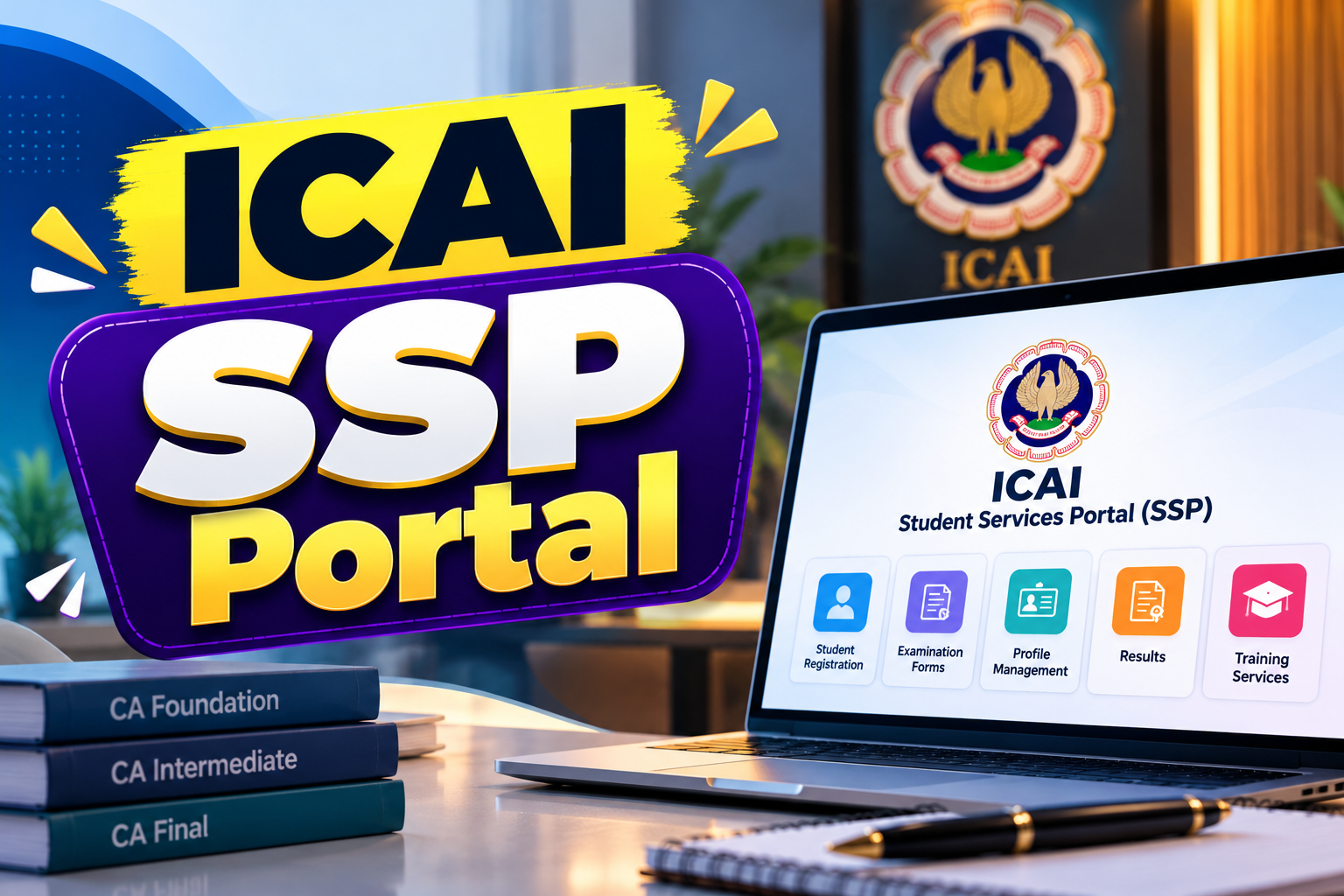
If you are pursuing Chartered Accountancy, there is a good chance you will need to use the ICAI SSP Portal at several stages of your journey. From managing student-related services to handling articleship applications, the portal is an important part of the administrative process associated with the CA course.

However, first-time users often have questions. Where should they log in? How can a new student create an account? What should they do if they forget their password? How can they check an application or get help when a service is not working?

The ICAI SSP Portal, also known as the Institute of Chartered Accountants of India’s Self Service Portal, brings several services for students, members and firms into an online platform. It reduces the need to handle many administrative requests through separate offline processes, although certain procedures may still require additional verification or action.

What Is the ICAI SSP Portal?

The ICAI Self Service Portal is an online platform operated by the Institute of Chartered Accountants of India (ICAI). It provides digital access to a range of administrative services related to the Chartered Accountancy profession.

Students can use the portal for relevant course and registration services. Members and firms can access their respective services through the appropriate modules.

The services displayed on your account depend on your user category, registration status and the particular functionality made available by ICAI.

The official portal is available here:

ICAI SSP Portal Login – Official Website

Always use the official ICAI domain when entering your login credentials. Avoid third-party websites that claim to provide access to your SSP account.

Who can use the SSP Portal?

User category Typical purpose
CA students Student registration and other applicable student services
Articleship trainees Practical training-related applications and services
Chartered Accountants Membership and other applicable professional services
CA firms Firm-related services available through the relevant module

Not every service is available to every user. If a particular option does not appear on your dashboard, check your registration status and the latest ICAI instructions before assuming that your account has an error.

How to Access the ICAI SSP Portal Login Page

The easiest way to access the portal is through ICAI’s official e-services website.

Follow these steps:

  1. Open the official ICAI SSP Portal.
  2. Locate the relevant login option for your user category.
  3. Enter the user ID or registration details requested on the screen.
  4. Enter your password and complete any displayed security verification.
  5. Sign in to access the services available to your account.

Depending on your account type and the current login interface, the portal may display options for first-time users, existing users who need to create login credentials, or users who need to retrieve their password.

Follow the instructions displayed on the live portal rather than relying entirely on older screenshots. ICAI can update the interface and login process over time.

Important: Your ICAI registration number and your portal login credentials serve different purposes in some situations. Enter the exact information requested in the relevant field.

How to Register as a New Student on the ICAI SSP Portal

Students who are beginning the CA course may need to complete their registration through the applicable ICAI student registration process.

The exact steps depend on the course, eligibility route and current registration workflow. A student registering for Foundation may follow a different route from an eligible graduate entering through the Direct Entry route.

For a new student, the general process is as follows.

Step 1: Open the official registration facility

Visit the ICAI SSP Portal and select the option intended for first-time student registration, where applicable.

Step 2: Enter the required personal details

Provide the details requested in the application. These may include your name, date of birth, contact information and educational details.

Make sure the information matches your supporting documents.

Step 3: Select the appropriate course or registration route

Choose the course and entry route applicable to your eligibility. Read the current ICAI instructions before proceeding.

Step 4: Upload the required documents

Upload the documents requested by the portal in the specified format and size. Depending on the application, these may include educational certificates, photographs, signatures or identity-related documents.

The actual document requirements should be verified against the relevant registration instructions.

Step 5: Review and submit the application

Check your personal details, selected course and uploaded documents before submitting the form. Correcting an error after submission may require additional action.

Step 6: Complete payment, where applicable

If a registration fee is payable, follow the portal’s payment instructions and retain the payment confirmation.

Step 7: Track the application

Check the application status through the available portal options. Keep any acknowledgement or reference number provided during submission.

A submitted application does not necessarily mean registration has been approved. Follow any additional instructions shown by ICAI.

For further guidance, visit the ICAI Students Services page.

Important Services Available Through the ICAI SSP Portal

The SSP Portal supports multiple categories of services. Understanding the purpose of each category can save time, especially when you are looking for a specific application or update.

Service category What users may need it for
Student services Course-related registration and other student applications
Articleship and practical training Relevant training registration and administrative processes
Membership services Membership-related applications and profile services
Firm services Services applicable to registered CA firms
Profile and account management Updating eligible details and managing login access
Support and ticketing Reporting eligible technical or service-related issues

The availability of a particular function depends on the user’s account and ICAI’s current procedures.

Student registration and course-related services

Students may use the portal for applicable course registration and other administrative requirements. If you are moving from one stage of the CA course to another, check the relevant eligibility and registration instructions before submitting an application.

Articleship-related services

Practical training is an important stage of the CA course. The portal supports relevant articleship-related processes, subject to the applicable rules and workflows.

Students should carefully verify details such as registration information, training dates and the particulars requested in their applications.

ICAI also provides an E-Diary facility for applicable articleship trainees. The official manual explains the E-Diary process, including attendance submissions and stipend-related entries.

Official PDF: ICAI E-Diary User Manual

The manual notes that E-Diary applies to eligible fresh articleship registrations commencing on or after 1 January 2026 and approved by the member. Check the current instructions for your specific case.

Membership and firm services

Members and firms can access their relevant modules for eligible professional and administrative requirements. These services are distinct from student functions, so the options available to a member may differ considerably from those displayed in a student account.

ICAI provides separate support channels for student, articleship, member and firm-related issues.

ICAI SSP Portal Password Reset: What to Do If You Cannot Log In

Forgetting a password is a common problem, particularly when students do not use the portal regularly.

Before trying multiple passwords, use the official password-recovery facility.

  1. Visit the ICAI SSP Portal.
  2. Select the available Forgot Password option.
  3. Enter the information requested by the portal.
  4. Complete any OTP or verification step displayed.
  5. Follow the instructions to reset your password.
  6. Return to the login page and try signing in again.

The precise recovery process may vary according to your account type and the portal’s current interface.

What if the password reset OTP does not arrive?

First, check whether your registered email address or mobile number is accessible and correct. Review your spam folder if an email verification message is expected.

Avoid requesting multiple OTPs in rapid succession. Wait for the stated delivery period and follow the portal’s instructions.

If the problem continues, use the relevant official support channel listed on ICAI’s SSP helpdesk page.

What if your registered email address or mobile number is no longer accessible?

Do not create another account using different personal details unless ICAI specifically instructs you to do so.

Instead, contact the appropriate support team and explain that you cannot access the registered contact details. You may be asked to complete identity verification or follow another official procedure.

Common ICAI SSP Portal Problems and Their Solutions

Not every login problem is caused by an incorrect password. Some issues arise from incomplete registration, outdated contact details, temporary technical problems or an application that needs further processing.

The following table provides a practical starting point.

Problem What you should try
Incorrect user ID or password Recheck the login details and use password recovery if necessary
OTP not received Verify registered contact details and retry after a reasonable interval
Account not accessible after registration Check whether registration has been confirmed and login credentials have been created
Application status not updated Review the acknowledgement and follow the portal’s instructions
Required service not visible Check your account category, registration status and eligibility
Payment completed but status pending Retain the transaction reference and check the portal before attempting payment again
Technical error or blank page Try a current browser, enable JavaScript and retry later
Personal details are incorrect Follow the official correction process for the relevant record

A note about payment problems

If a payment appears to have failed, do not immediately make another payment without checking the transaction status. Save the transaction reference, payment confirmation and any error message.

If the amount has been debited but the application still shows a pending status, contact the relevant support team with the available evidence.

How to raise a support ticket

ICAI provides guidance for raising support tickets and checking their status.

Start with the official page:

ICAI SSP User Guides and FAQs

You can also consult the ICAI SSP FAQs and support resources.

Choose the support option relevant to your issue, describe the problem clearly and include the details requested by ICAI. Avoid sending passwords or OTPs in support messages.

Official ICAI Support Email IDs for SSP Issues

One useful detail that many general SSP guides overlook is that ICAI has separate email addresses for different categories of issues.

According to ICAI’s official SSP helpdesk information, the following channels are available.

Issue category Official support email
Student-related issues ssp.student@icai.in
Articleship-related issues ssp.article@icai.in
Member-related issues, excluding firms ssp.member@icai.in
Firm-related issues ssp.firm@icai.in
Login-related issues ssp.login@icai.in

You can verify these addresses on the official ICAI SSP Helpdesk page.

ICAI has also published a notice stating that ssp.helpdesk@icai.in was scheduled for deactivation from 15 August 2026. Therefore, users should use the relevant domain-specific address rather than relying on the older general helpdesk email.

When writing to support, include your name, relevant registration or application reference, a short explanation of the problem and a screenshot if it helps explain the error. Never include your password or OTP.

ICAI SSP Portal vs Other ICAI Online Portals

ICAI operates several online platforms, and it is easy to confuse them when you are new to the CA course.

The SSP Portal is not the only online facility students use. Some platforms have separate purposes and may require their own registration or login steps.

Platform Primary purpose
SSP Portal Student, articleship, membership and firm-related administrative services
ICAI Students Services Central information page linking students to ICAI facilities
Board of Studies Knowledge Portal Learning resources and study material
ICAI Digital Learning Hub Digital learning and related educational services
ICAI E-Diary Applicable articleship attendance and related training records

For example, the ICAI Digital Learning Hub provides a learning-focused environment. Its login and registration instructions should be followed separately where applicable.

Similarly, the ICAI Students Services page is useful when you need to find the correct official portal for a particular task.

Choosing the right portal matters because a service such as examination preparation or learning material may not be managed through the same screen as a student registration application.

Tips for Using the ICAI SSP Portal Safely and Efficiently

A few simple habits can make your experience with the portal much smoother.

Keep your registered contact details accessible. Email and mobile verification may be needed for login recovery or other administrative processes.

Save application acknowledgements. Keep copies of submitted forms, payment receipts and reference numbers until the process is complete.

Check details before submission. A small spelling error or incorrect date can create avoidable administrative work.

Use official sources for deadlines. Do not depend on social media posts or old articles when a registration deadline or procedure is important.

Protect your login credentials. Never share your password or OTP with another person claiming to provide portal assistance.

Keep track of pending applications. Check the status of submitted requests and respond to any additional requirements displayed by ICAI.

Read the relevant user manual. Official guides often explain specific procedures more accurately than generic step-by-step articles.

How CAMentoringProgram.org Can Support Your CA Journey

Administrative tasks are only one part of preparing for the CA qualification. Students also need a consistent study routine, regular revision and sufficient question practice.

CAMentoringProgram.org can be explored as an additional resource for CA-related learning and mentoring support.

A useful approach is to manage your administrative work and examination preparation separately. Keep your registration details and application acknowledgements organised, while maintaining a study schedule that covers your subjects, mock tests and revision targets.

If you are preparing for CA Foundation, Intermediate or Final, use ICAI’s official announcements and prescribed study material to confirm examination requirements. Supplement those resources with suitable learning support when you need help understanding concepts or planning your preparation.

Remember that a mentoring or coaching resource complements the official registration process; it does not replace ICAI’s rules, portal instructions or formal application requirements.

Conclusion

The ICAI SSP Portal is an important online facility for CA students, articleship trainees, Chartered Accountants and firms. Understanding how to access the portal, manage login credentials and locate the right service can save time throughout the CA journey.

New students should follow the applicable registration process carefully, while existing users should keep their account details updated and retain records of important applications. If a login or technical issue arises, the official support resources and domain-specific email addresses provide a reliable starting point.

Most importantly, always verify registration requirements, deadlines and procedural changes through ICAI’s official website. This helps you avoid outdated instructions and complete your administrative work with greater confidence.

ICAI Updated: New Income Tax Act 2025 – Latest Changes, Key Features and Important Updates

India’s income tax framework has entered a new phase with the implementation of the Income-tax Act, 2025. For decades, taxpayers, Chartered Accountants, finance professionals and CA students have relied on the Income-tax Act, 1961. However, years of amendments, explanations and cross-references made the legislation increasingly difficult to navigate.

The new law aims to make income tax provisions easier to read, better organised and more straightforward to interpret. It came into force on 1 April 2026, replacing the Income-tax Act, 1961 for the tax years covered by the new framework.

The Institute of Chartered Accountants of India (ICAI) has also made resources available to help professionals and students understand the changes. These include publications containing tabular mappings between the old and new Acts, along with material relating to the Income-tax Rules, 2026.

For CA students, the update deserves particular attention. Understanding a new law involves more than memorising section numbers. Students need to identify which legislation applies to a particular tax year, understand revised terminology and learn how to use the new provisions in practical situations.

What Is the New Income-tax Act, 2025?

The Income-tax Act, 2025 is the legislation introduced to replace India’s six-decade-old Income-tax Act, 1961. It was passed by Parliament in August 2025 and received presidential assent on 21 August 2025.

According to the Central Board of Direct Taxes (CBDT), the new Act came into force on 1 April 2026. The Income-tax Rules, 2026 were notified on 20 March 2026 to support its implementation.

The central objective is to simplify the presentation of tax law without fundamentally changing the underlying tax policy merely because the legislation has been rewritten.

In practical terms, the new framework aims to make it easier to locate relevant provisions, understand definitions and identify the rules applicable to a transaction.

Official government reference: Income-tax Act, 2025 – Full PDF

The original legislation remains important when dealing with earlier tax years and proceedings governed by the previous law. Therefore, readers should not assume that the new Act makes every historical tax reference invalid.

Latest ICAI Updates on the New Income-tax Act

ICAI has created a dedicated resource page for the Income-tax Act, 2025. The page includes the new Act, tabular mapping of provisions, suggestions considered during the legislative process and resources relating to the Income-tax Rules, 2026.

One particularly useful development is the availability of comparative material mapping provisions under the 2025 Act against those under the 1961 Act.

This is valuable because professionals and students cannot always rely on the old section number when researching a provision under the new legislation.

ICAI’s updated publications also help readers understand how the legislation has been reorganised and how the corresponding provisions should be located.

Important official resources

Resource Why it matters
ICAI Income-tax Act, 2025 page Central location for ICAI publications and updates
Income-tax Act, 2025 PDF Primary legislation for the new framework
Income-tax Rules, 2026 resources Rules and prescribed compliance requirements
Income Tax Department FAQs Practical explanations of the new law
ICAI tabular mapping publication Helps compare provisions under the old and new Acts

Read the official resources here:

These links should be prioritised over unofficial summaries whenever the precise wording of a provision is important.

Income-tax Act, 1961 vs Income-tax Act, 2025

The most visible changes relate to the structure of the legislation, the terminology used and the way provisions are presented.

The new Act contains 536 sections and 16 schedules, compared with 819 sections and 14 schedules in the 1961 Act. The reduction reflects consolidation, reorganisation and the removal of redundant or obsolete provisions; it should not be interpreted as meaning that every removed section represents a tax exemption or a reduction in tax liability.

The following table summarises the major differences.

Basis of comparison Income-tax Act, 1961 Income-tax Act, 2025
Legal framework Earlier income tax legislation Replacement legislation
Effective date Governed earlier tax years and relevant transitional matters Effective from 1 April 2026
Number of sections 819 536
Number of schedules 14 16
Main terminology for the annual period Previous year and assessment year Tax year
Presentation Developed through decades of amendments Reorganised and simplified structure
Provisions and explanations Numerous provisos and explanations across the Act Greater consolidation and use of tables and clearer drafting
Historical tax matters Continues to govern relevant earlier-year matters Applies according to commencement and transitional provisions

The practical lesson is simple: the new Act should be studied as a reorganised legal framework, not as a document in which every old section has a directly equivalent new section number.

For detailed interpretation, use the relevant statutory text and ICAI’s comparative mapping rather than relying on section-number comparisons alone.

The Biggest Change: Introduction of the Concept of a Tax Year

One of the most important terminology changes is the introduction of the term tax year.

Under the Income-tax Act, 1961, students and taxpayers commonly worked with two different expressions: previous year and assessment year. The previous year generally referred to the period in which income was earned, while the assessment year referred to the subsequent year in which that income was assessed.

For many beginners, this distinction created unnecessary confusion.

Under the new Act, the tax year brings the annual income period into a more straightforward framework.

Example of the tax year concept

Suppose a salaried employee earns income between 1 April 2026 and 31 March 2027.

Under the new framework, this period is referred to as Tax Year 2026–27.

Particular Treatment
Income period 1 April 2026 to 31 March 2027
Applicable terminology Tax Year 2026–27
Governing legislation Income-tax Act, 2025, subject to applicable provisions
Important consideration Relevant rates, rules, deductions and compliance requirements must be checked separately

The new terminology does not mean that the income is assessed or paid in exactly the same manner at every stage. Return-filing dates, advance tax obligations, withholding requirements and other compliance rules continue to depend on the applicable provisions.

A tax year may also be shorter than twelve months in specified circumstances, such as when a business is newly established or a new source of income comes into existence during the year.

For CA students, understanding this concept is essential before attempting practical questions on the charge of income tax, tax computation and compliance.

Does the New Income-tax Act Introduce New Taxes?

No. The replacement of the Income-tax Act, 1961 with the Income-tax Act, 2025 is primarily a legislative simplification and restructuring exercise. The Income Tax Department’s official FAQs clarify that the new Act does not introduce a new tax merely by replacing the earlier legislation.

However, this does not mean that all tax rates, deductions, exemptions, thresholds or compliance requirements remain identical in every situation. Such matters must be checked against the relevant Finance Act, the new Act, applicable Rules and other notifications.

For example, a provision may be presented more clearly in the new law while its applicable tax rate is determined by the relevant year’s legislation.

This distinction is important when reading headlines about tax reform. A simpler Act does not automatically mean lower tax liability for every taxpayer.

Before making a tax-planning decision, taxpayers should verify the rules applicable to their specific income, status and tax year.

Important Changes in the Structure of Tax Law

The new Act focuses on making provisions easier to locate and interpret. Some of its notable structural features include the following.

A. Simpler statutory language

The 1961 Act accumulated amendments, provisos and explanations over many decades. This sometimes required readers to navigate several layers of legal text to understand one provision.

The new legislation aims to express rules more clearly and reduce avoidable complexity.

B. Consolidation of provisions

Related provisions have been reorganised to improve the overall structure. In suitable cases, explanations and provisos have been incorporated into the main statutory text.

C. Greater use of tables and formulas

Tables and formulas can make numerical limits, conditions and classifications easier to follow. This is particularly helpful when a provision contains several categories or eligibility requirements.

D. Removal of redundant provisions

The new Act also removes obsolete or redundant material. Nevertheless, students should verify whether a particular rule has been removed, consolidated or replaced before reaching a conclusion about its legal effect.

E. Updated rules and forms

The Income-tax Rules, 2026 and corresponding prescribed forms support the new framework. These documents matter because the Act alone may not contain every operational detail required to complete a return, make a disclosure or comply with a procedural requirement.

The Act, Rules, prescribed forms and relevant notifications should therefore be read together whenever a practical tax question depends on more than the wording of the main provision.

Income-tax Rules, 2026: Why They Matter

The Income-tax Act provides the statutory framework, while the Income-tax Rules contain important details needed to implement the law.

The Income-tax Rules, 2026 were notified on 20 March 2026. The corresponding prescribed forms were also notified as part of the implementation framework.

For taxpayers, these Rules can affect how information is reported, which forms are used and how particular compliance requirements are fulfilled. For Chartered Accountants, they are essential when preparing returns, advising clients and checking procedural obligations.

For example, a tax professional working on a client’s return should not rely solely on an old form or an earlier year’s checklist. The professional must confirm the relevant tax year, applicable law, prescribed form and current instructions.

ICAI’s resources relating to the Income-tax Rules, 2026 are particularly useful because they include comparative mapping of the new Rules and forms against the earlier framework.

Official ICAI resource: Income-tax Act, 2025 – ICAI publications and updates

Students should remember that the Act and Rules perform different functions. Reading only the Act may not be sufficient to answer a practical question involving reporting formats or procedural compliance.

What Happens to the Income-tax Act, 1961 After 1 April 2026?

The Income-tax Act, 1961 was repealed with effect from 1 April 2026, subject to the relevant saving and transitional provisions.

However, repeal does not mean that all matters connected with earlier tax years automatically move to the new Act.

The law preserves continuity for earlier-year matters, and the old legislation continues to apply where the transitional provisions require it.

Consider a taxpayer whose income relates to a financial year ending before 1 April 2026. An assessment, appeal, reassessment or other proceeding concerning that earlier period may continue under the 1961 Act, depending on the applicable transitional provisions.

This is why the old legislation remains relevant even after the new Act has commenced.

Understanding the transition

Situation What should be checked?
Return for an earlier tax period Applicable old-law provisions and prescribed return forms
Assessment relating to a pre-April 2026 tax year Transitional provisions and the relevant procedural law
Advance tax for Tax Year 2026–27 Requirements under the new framework
Existing registration or approval Whether it continues under the saving provisions and corresponding new-law requirements
Tax notice relating to an earlier year The tax period, nature of proceeding and applicable transitional rule

The Income Tax Department has clarified that the repeal does not invalidate completed assessments or automatically terminate pending proceedings relating to earlier years.

For example, a return filed in July 2026 for Assessment Year 2026–27 relates to income earned in the financial year 2025–26. That return remains governed by the relevant provisions of the earlier Act.

By contrast, income earned during Tax Year 2026–27 falls within the new framework, subject to the applicable provisions.

This distinction is especially important during the transition period, when taxpayers and professionals may need to work with both Acts.

Important Implications for CA Students

For students preparing for CA examinations, the new Income-tax Act is not simply a change in the name of legislation. It affects the way tax concepts, statutory references and practical problems must be approached.

The first step is to identify which law and tax period apply to a question. A provision relevant to an earlier assessment year should not automatically be answered using a new section reference.

The second step is to understand the substance of the provision. Students should learn what a rule means, which conditions it contains and how it applies to the facts of a problem.

The third step is to practise locating the corresponding provision in the new legislation. ICAI’s tabular mapping can help students connect familiar concepts with the reorganised law.

A practical study approach

Study activity Why it helps
Read the applicable official legislation Builds accuracy and prevents reliance on outdated summaries
Use ICAI’s comparative mapping Helps locate corresponding provisions
Prepare a terminology comparison sheet Makes the tax year concept easier to remember
Practise case-based questions Develops application and interpretation skills
Review the relevant Rules and forms Improves understanding of practical compliance
Verify amendments and examination applicability Prevents studying the wrong legal provisions

One common mistake is to memorise a section number without understanding the provision. This approach becomes less effective when legislation is reorganised.

A better method is to record the concept, relevant conditions, applicable tax period and current statutory reference together. Students should also check the official ICAI examination announcements and study material applicable to their specific attempt before deciding which version of the law to prepare.

How Can Chartered Accountants and Tax Professionals Prepare?

The transition also requires practical preparation from professionals who handle individual returns, business taxation, audits and tax advisory assignments.

A useful starting point is to review existing workpapers, checklists and reference materials. Any document that relies heavily on section numbers or terminology from the 1961 Act should be checked for updates.

Professionals should also review the tax periods associated with their open assignments. A single client may have a historical assessment matter under the old law and a current-year compliance requirement under the new one.

The following steps can make the transition more manageable:

  1. Update reference material: Keep the current Act, Rules, prescribed forms and relevant notifications accessible.
  2. Review recurring compliance work: Check return-preparation templates, tax computation sheets and client checklists.
  3. Map historical references: Use ICAI’s comparative material to identify corresponding provisions.
  4. Separate tax periods: Clearly distinguish earlier-year proceedings from obligations arising under the new framework.
  5. Verify the law before advising clients: Do not assume that an old section number, form or procedural deadline remains applicable.
  6. Maintain an amendment record: Record the source and date of important updates used in professional work.

These steps are particularly useful for firms managing multiple clients and several tax years simultaneously.

Official PDFs and Resources for the New Income-tax Act

Readers searching for the latest ICAI update should begin with official sources rather than relying exclusively on coaching websites, news summaries or social media posts.

The following resources provide a useful starting point.

Official resource Link Best use
ICAI’s Income-tax Act, 2025 page Open ICAI resource page Finding ICAI publications and comparative material
Income-tax Act, 2025 Download official PDF Reading the legislation
Income Tax Department FAQs Read official FAQs Understanding the purpose and scope of the new law
Income Tax Department’s New Act section Visit the New Act help centre Finding guidance on returns, tax payments, forms and proceedings
CBDT implementation announcement Read the official press release Confirming the commencement date and implementation background

Important note about ICAI PDFs: ICAI’s dedicated resource page is the recommended starting point for its publication on the Income-tax Act, 2025, including tabular mapping against the 1961 Act. Open the relevant publication listed there to access the applicable PDF. Always check its edition and amendment coverage before using it for examination preparation or professional advice.

How CAMentoringProgram.org Can Help CA Students Understand Tax Updates

Keeping up with changes in tax legislation can feel challenging, particularly for students who are already managing a demanding CA syllabus.

The most effective approach is to combine conceptual understanding with regular revision and question practice. Rather than treating every update as an isolated piece of information, students should connect it with the relevant tax concepts and learn how to apply the law to a given set of facts.

CAMentoringProgram.org can be used as a starting point for exploring CA learning and mentoring resources. Students should look for relevant study guidance, revision support and explanations that complement official ICAI material.

For the new Income-tax Act, a sensible preparation routine includes reading the prescribed study material, checking official amendments, making short comparison notes and practising questions based on the applicable provisions.

Students preparing for a specific examination attempt should confirm the applicable syllabus and statutory amendments through ICAI’s official announcements. A general article, including this one, should supplement rather than replace the material prescribed for that attempt.

Conclusion

The Income-tax Act, 2025 marks an important change in how India’s income tax legislation is structured and presented. Effective from 1 April 2026, it replaces the Income-tax Act, 1961 for the periods governed by the new framework, while transitional provisions preserve the operation of the earlier law for relevant historical matters.

The introduction of the tax year concept, the reduction in the number of sections, the reorganisation of provisions and the notification of the Income-tax Rules, 2026 are important developments for taxpayers and professionals.

For CA students, the key is to understand the new terminology, learn how to locate provisions and practise applying the law to practical situations. For professionals, updating reference material and distinguishing between old-law and new-law matters are essential parts of the transition.

ICAI’s official publications and comparative mapping, together with the Income Tax Department’s FAQs and statutory documents, provide reliable resources for understanding these changes.

Readers should always verify the latest applicable provisions before making tax decisions or relying on a particular section for examination or professional work.

CA Scholarship Schemes 2026: Eligibility, Amount, Application Process and Benefits

Pursuing Chartered Accountancy is a major commitment. Students have to manage registration fees, coaching expenses, study material, examination fees, travel and everyday costs while preparing for one of India’s most demanding professional courses. For students from financially weaker families, these expenses can become an additional source of stress.

The good news is that financial support may be available through the Institute of Chartered Accountants of India (ICAI). Its scholarship schemes are designed to support eligible students at different stages of the CA course, including Foundation, Intermediate and Final. Certain schemes focus on financial need, while others reward academic performance.

However, scholarship information can be confusing. You may find older articles mentioning different monthly amounts, income limits and eligibility conditions. This is why students should always check the latest official announcement before applying.

What Are CA Scholarship Schemes?

CA scholarship schemes are financial assistance programmes that help eligible Chartered Accountancy students manage some of the expenses associated with their education and training.

ICAI offers scholarship and financial assistance initiatives through its student support systems. The eligibility conditions differ depending on the scheme. Some are intended for students whose family income falls within a prescribed limit, while others recognise students who have secured high ranks in the CA Intermediate examination.

The scholarship amount, duration and application conditions depend on the particular category. Students should not assume that registration in a CA course automatically makes them eligible for every scholarship.

For official information, visit the ICAI student services website and the ICAI Board of Studies scholarship page.

Types of CA Scholarship Schemes in 2026

ICAI’s revised scholarship flyer provides details of financial assistance for students registered in the Foundation, Intermediate and Final courses. It also includes awards for students who perform well in the Intermediate examination.

The following table summarises the categories and amounts stated in the revised flyer. Students should confirm the applicable conditions on the official portal before submitting an application.

Scholarship category Monthly amount Main eligibility condition
Economically needy Foundation students ₹1,500 Foundation registration and parental income not exceeding ₹5 lakh per annum
Economically needy Intermediate students ₹2,500 Intermediate registration through the Foundation or Direct Entry route; parental income not exceeding ₹5 lakh per annum
Economically needy Final students ₹2,500 Final registration, commencement of articleship and parental income not exceeding ₹5 lakh per annum
Economically needy Final students with merit ₹4,000 Intermediate rank from 11th to 50th, Final registration, articleship commencement and parental income not exceeding ₹5 lakh per annum
Merit award for Final course students ₹5,000 Intermediate rank up to 10th, Final registration and commencement of articleship

Source: ICAI Board of Studies scholarship flyer. Amounts and eligibility should be verified against the latest applicable notice.

1. CA Foundation Scholarship

The CA Foundation course is the entry-level stage for students following the Foundation route. Although it is the first stage of the CA journey, students may already have to pay for registration, preparation material, classes and examination-related expenses.

ICAI’s revised scholarship flyer lists financial assistance for economically needy students registered for the Foundation course.

Eligibility for CA Foundation scholarship

According to the revised flyer, the key conditions include:

  • The student must be registered for the CA Foundation course.
  • The annual income of the student’s parents must not exceed ₹5 lakh.
  • The student should satisfy the applicable application and verification requirements.

Scholarship amount and duration

The revised scheme lists an award of ₹1,500 per month for four months, commencing from the month following Foundation registration, as described in the flyer.

Students should check the latest instructions on the Self Service Portal (SSP) to confirm how the application is submitted and which documents are required.

Who should consider applying?

This scheme may be worth exploring if you have recently registered for CA Foundation and your family needs financial support to manage study expenses.

Do not delay checking the official conditions. Keep your registration details and family-income documents ready so that you can complete the process when required.

2. CA Intermediate Scholarship

CA Intermediate is an important stage of the Chartered Accountancy course. The syllabus is more advanced, preparation often becomes more intensive, and students may spend additional money on coaching, revision classes, mock tests and other study resources.

The revised ICAI scholarship flyer includes an economically needy student scholarship for those registered for Intermediate through either the Foundation route or the Direct Entry route.

CA Intermediate scholarship eligibility

The principal conditions listed in the revised flyer are:

  • Registration for the CA Intermediate course through an eligible route.
  • Annual parental income not exceeding ₹5 lakh.
  • Compliance with the applicable ICAI application and verification requirements.

How much scholarship can Intermediate students receive?

The revised flyer specifies ₹2,500 per month for eight months, starting from the month following Intermediate registration.

It also describes possible additional periods:

  • An additional three months if the student completes ICITSS within the first eight months of Intermediate registration.
  • An additional three months if the student passes either one group of the Intermediate examination within 12 months of registration.

These extensions are subject to the conditions stated in the scheme. Students should verify the current implementation and supporting requirements on the official portal rather than assuming the extensions are automatic.

Practical advice for Intermediate students

Before applying, check your course registration date, eligibility route and income documents. If you have completed ICITSS or passed one group, retain the relevant records because they may be needed to establish eligibility for an extended scholarship period.

3. CA Final Scholarship for Economically Needy Students

CA Final preparation can bring additional financial pressure. Students have to balance their studies with practical training requirements, and some may need financial assistance to continue their preparation without placing extra pressure on their families.

ICAI’s revised flyer lists a scholarship for economically needy students registered for the Final course who have commenced their articleship.

Eligibility requirements

The main conditions listed in the revised flyer include:

  • Registration for the CA Final course.
  • Commencement of articleship.
  • Annual parental income not exceeding ₹5 lakh.
  • Fulfilment of the applicable verification and application conditions.

Scholarship amount

The revised scheme specifies ₹2,500 per month for up to 24 months or the remaining period of articleship, whichever is less.

This distinction matters. The scholarship duration is not necessarily the same for every student because the remaining period of articleship can vary.

How can it help CA Final students?

Financial assistance can help students manage part of their preparation expenses, including books, revision resources, internet access and other study-related costs. It may not cover every expense, so students should prepare a realistic budget before relying on the scholarship.

If you have registered for CA Final and commenced articleship, check the latest ICAI notice to see whether you satisfy the income and other eligibility conditions.

4. Merit-Based Scholarship for CA Intermediate Rank Holders

Some CA students perform exceptionally well in Intermediate but still face financial difficulties during Final preparation. ICAI’s revised scholarship flyer includes a merit-based assistance category for eligible rank holders whose family income falls within the prescribed limit.

Who can apply?

The revised flyer lists the following main requirements:

  • The student must have secured a rank from 11th to 50th in the CA Intermediate examination.
  • The student must register for the CA Final course.
  • The student must commence articleship.
  • Annual parental income must not exceed ₹5 lakh.

Scholarship amount and duration

Eligible students may receive ₹4,000 per month for up to 24 months or the remaining period of articleship, whichever is less, subject to the scheme’s conditions.

This category combines academic performance with financial need. A student should therefore check both the rank-related requirement and the income limit before applying.

What should students remember?

A good Intermediate rank alone may not be sufficient. Final registration, commencement of articleship and income eligibility are also important under the revised flyer. Review the latest official instructions before assuming that you qualify.

5. Merit Award for CA Final Students

The merit award is intended to recognise students who achieve outstanding results in the CA Intermediate examination and progress to the Final course.

Unlike the economically needy scholarship categories described above, the revised flyer lists this award based on rank and course progression rather than stating a parental-income limit for this category.

Eligibility for the merit award

According to the revised flyer, the main requirements are:

  • The student must have secured a rank up to 10th in the CA Intermediate examination.
  • The student must register for CA Final.
  • The student must commence articleship.

Amount and duration

The revised flyer specifies ₹5,000 per month for 24 months or the remaining period of articleship, whichever is less.

Students who have secured a top Intermediate rank should review the latest award conditions and confirm that they have completed the required registration and training steps.

Comparison of CA Scholarship Schemes

The following comparison makes it easier to identify which category you may need to investigate.

Your current situation Scheme to check Amount listed in revised flyer
Registered for CA Foundation and meet the income condition Foundation financial assistance ₹1,500 per month
Registered for CA Intermediate and meet the income condition Intermediate financial assistance ₹2,500 per month
Registered for CA Final, commenced articleship and meet the income condition Final financial assistance ₹2,500 per month
Intermediate rank between 11th and 50th, Final registration, articleship and income eligibility Merit-based Final scholarship ₹4,000 per month
Intermediate rank up to 10th, Final registration and articleship Final merit award ₹5,000 per month

The table is a starting point, not a substitute for the full rules. Before applying, check the latest notification, eligibility wording, duration and documentation requirements.

6. Chartered Accountants Students Benevolent Fund (CASBF)

In addition to the Board of Studies scholarship schemes, ICAI provides a separate support route through the Chartered Accountants Students Benevolent Fund (CASBF).

CASBF is relevant to students facing financial hardship and certain distress situations. The ICAI website lists financial assistance for economically weaker CA students, medical financial assistance, assistance for students undergoing articleship, and support relating to the death of both parents in specified circumstances.

The assistance available through CASBF is separate from the scholarship categories discussed above. Its eligibility rules, application forms and decisions may differ.

Students experiencing serious financial difficulty should review the official ICAI CASBF and financial assistance page. Read the relevant application form carefully and check the evidence required for the particular type of assistance.

This option is particularly important for students whose circumstances may not fit neatly into a standard scholarship category.

7. How to Apply for an ICAI Scholarship Online

Students can use the ICAI Self Service Portal to access relevant scholarship services. The exact steps and forms available may change, so follow the current instructions shown on the official website.

Step 1: Visit the official portal

Open the ICAI Self Service Portal. Avoid entering personal details on unofficial websites that claim to process ICAI scholarships.

Step 2: Log in to your account

Use your registered credentials to access your student account. If you have difficulty logging in, use the portal’s available support or account-recovery options.

Step 3: Locate the scholarship option

Look for the scholarship or student financial assistance section. Check which schemes are currently available and identify the category relevant to your course and circumstances.

Step 4: Read the eligibility conditions

Before completing the form, check the course registration requirement, income limit, rank criteria, articleship conditions and scholarship duration. A small difference in eligibility can affect whether an application is accepted.

Step 5: Complete the application carefully

Enter your personal, educational and financial details accurately. Ensure that the information matches your official records and supporting documents.

Step 6: Upload or provide the required documents

Submit the documents requested by the current application process. Make sure scans or photographs are clear, readable and complete.

Step 7: Review and submit

Check every field before submitting the form. Save the application acknowledgement or reference number if one is provided.

Step 8: Monitor your application

Check the portal and any official communication for updates, queries or requests for additional information. Do not assume that submitting the application guarantees approval or immediate payment.

8. Documents to Keep Ready Before Applying

The exact document list depends on the scholarship category and the current ICAI instructions. Preparing common records in advance can make the application process easier.

Document or detail Why it may be required
ICAI registration details To verify course registration
Identity details To confirm the applicant’s identity
Parent or guardian income certificate or supporting proof To establish income eligibility where applicable
CA Intermediate result or rank details To verify merit-based eligibility
CA Final registration details To confirm progression to Final
Articleship details To verify training-related conditions
Bank account details If required for scholarship disbursement
Recent photograph or other requested records To meet the form’s requirements

This is a preparation checklist, not a definitive list of mandatory uploads. Follow the current application form and provide only the documents requested through the official process.

9. Common Mistakes Students Should Avoid

Students sometimes miss financial assistance because they rely on outdated information or overlook an eligibility condition. These are some common mistakes to avoid.

Relying on old scholarship amounts: Scholarship amounts and income limits can change. Check the latest ICAI flyer rather than copying details from an older blog.

Assuming every CA student qualifies: Registration alone does not guarantee eligibility. Income, rank, articleship and other requirements may apply.

Ignoring the articleship condition: Some Final-level categories specifically require the student to have commenced articleship. Confirm your status before applying.

Submitting inconsistent information: Differences between the application, registration records and supporting documents can lead to queries or delays.

Using unofficial application links: Start from the official ICAI website or Self Service Portal. Be cautious of websites requesting unnecessary fees or sensitive information.

Not checking the application status: Keep the acknowledgement and monitor official communications after submitting the form.

Confusing different assistance programmes: A Board of Studies scholarship and CASBF financial assistance are not interchangeable. Read the rules for the specific programme you intend to use.

10. How CA Students Can Manage Expenses Alongside Scholarships

A scholarship can provide valuable support, but it is sensible to plan your finances around the expenses you know you will face.

Start by listing your essential costs, such as registration, examination fees, books, travel, internet access and classes. Separate one-time expenses from monthly expenses so that you can see where financial support would make the greatest difference.

Use official ICAI study material and available learning resources wherever they meet your needs. Before paying for additional classes or test series, compare the syllabus coverage, faculty support, mock tests, evaluation process and overall cost.

Students can also discuss their study budget with their families early in the preparation cycle. This makes it easier to identify financial gaps and explore suitable assistance options in time.

At CA Mentoring Program, students can use structured preparation guidance to understand their CA journey, plan their studies and make more informed decisions about learning resources. Scholarship eligibility and approval, however, are determined by the relevant official scheme and not by a coaching or mentoring provider.

11. Official Links for CA Scholarship Schemes

Use these official resources to verify current scholarship conditions and access the relevant services.

Resource Purpose Official link
ICAI Board of Studies scholarship page Scholarship information for CA students Open page
Revised ICAI scholarship flyer Amounts, eligibility and duration listed in the revised scheme View PDF
ICAI Self Service Portal Student account and available online services Open portal
ICAI student services Access to student support and services Open page
CASBF financial assistance Support for eligible students facing financial hardship Open page

Important: If the website or portal displays a newer notification, use the latest applicable instructions. The flyer summarised in this article is a useful guide, but the official rules and application requirements take precedence.

Conclusion

CA scholarship schemes can make the Chartered Accountancy journey more manageable for students who need financial support or have performed exceptionally well in their examinations. ICAI’s revised scheme lists assistance for eligible Foundation and Intermediate students, economically needy Final students, Intermediate rank holders and top-ranked students progressing to Final.

The best starting point is to identify your current CA course, check your family-income eligibility where applicable, confirm any rank or articleship conditions, and review the latest ICAI notification. Keep your documents ready and submit accurate information through the official portal.

If one scholarship category does not fit your circumstances, check whether CASBF financial assistance may be relevant. Exploring the available options early can help you make a more informed financial plan and focus more confidently on your CA preparation.

At CA Mentoring Program, the goal is to help students approach their CA journey with better planning, clarity and consistent preparation. Understanding your financial support options is one practical step towards that goal.

ICAI Membership Fees 2026: Registration, Annual Renewal and COP Charges

Becoming a Chartered Accountant is a major milestone, but passing the CA Final examination is not the final step in the membership process. Eligible candidates must complete the applicable formalities with the Institute of Chartered Accountants of India (ICAI) to obtain membership and use the relevant professional designation.

One question that often comes up at this stage is: How much are the ICAI membership fees, and what additional charges should a newly qualified CA expect?

The answer depends on whether you are applying for membership for the first time, renewing your existing membership, applying for a Certificate of Practice (COP), or upgrading from Associate membership to Fellow membership.

These fees should not be confused with CA course registration or examination fees. Membership charges apply to the professional membership process and its ongoing requirements.

The amounts below are based on ICAI’s official Member Services FAQ, last updated on 26 May 2026. Always confirm the applicable amount on the ICAI Self-Service Portal before making a payment, as official fee rules and procedures may change.

What Are ICAI Membership Fees?

ICAI membership fees are charges associated with becoming and remaining a member of the Institute of Chartered Accountants of India.

Once a candidate fulfils the applicable eligibility requirements, they can apply for membership through the prescribed process. After admission, members must also comply with the Institute’s annual renewal requirements.

The amount payable depends on the type of application and the member’s circumstances.

For example, a newly qualified CA applying for Associate membership will follow a different fee process from an existing Associate member renewing their membership for another year.

Similarly, a member who wants to practise as a Chartered Accountant must consider the applicable Certificate of Practice requirements and fees.

Understanding these differences helps you identify the correct amount instead of relying on a single figure found online.

ICAI Membership Application Fees for Newly Qualified CAs

After completing the required examinations and other applicable eligibility conditions, a candidate can apply for Associate membership using Form 2.

According to ICAI’s Member Services FAQ, the current total application fee is:

Application Category Fee
Form 2 application without COP ₹4,130
Form 2 application with COP ₹7,670
Discount when opting for the e-journal ₹590

The e-journal discount is subject to the applicable ICAI conditions. Confirm the final payable amount shown on the Self-Service Portal before completing the transaction.

These figures relate to the initial Form 2 membership application, not the annual renewal fee payable in subsequent years.

Who can apply for ICAI membership?

ICAI’s Member Services FAQ identifies requirements including passing both groups of the CA Final examination, completing the applicable articleship training, completing AICITSS and satisfying the relevant online test requirements.

Your eligibility and the documents required may depend on the applicable scheme and your individual records.

Before applying, check that your examination results, practical training details and other required information have been updated correctly in the ICAI Self-Service Portal.

How to apply for membership

The general process is as follows:

  1. Log in to the ICAI Self-Service Portal using your student credentials.
  2. Open the Fresh Membership Enrollment section in the Student Module.
  3. Select Form 2, provided you meet the applicable eligibility conditions.
  4. Review your personal details, examination records and training information.
  5. Complete any outstanding profile updates or documentation requirements.
  6. Pay the applicable fee and submit the application.
  7. Track the application status through the portal.

ICAI states in its Member Services FAQ that a complete Form 2 application normally takes around two to three days to process. Processing may take longer if information is incomplete or requires clarification.

Official portal: https://eservices.icai.org/

ICAI Annual Membership Fees 2026

After becoming a member, you must keep track of the annual membership renewal fee.

The annual amount depends on whether you hold Associate membership (ACA) or Fellow membership (FCA), whether you hold a Certificate of Practice and, in certain cases, your age.

The following table presents the annual fee structure published in ICAI’s Member Services FAQ updated on 26 May 2026.

Annual membership fees for members below 60 years

Membership Category Membership Fee GST Total Annual Fee
Associate member without COP ₹1,500 ₹270 ₹1,770
Fellow member without COP ₹3,000 ₹540 ₹3,540
Associate member with COP ₹1,500 + ₹3,000 COP fee ₹810 ₹5,310
Fellow member with COP ₹3,000 + ₹4,000 COP fee ₹1,260 ₹8,260

The totals include GST at 18%, as shown in ICAI’s published fee schedule.

Annual membership fees for members aged 60 years or above

For members who are at least 60 years old as of 1 April and do not hold a COP, the published fee structure is different.

Membership Category Membership Fee GST Total Annual Fee
Associate member without COP ₹1,100 ₹198 ₹1,298
Fellow member without COP ₹2,300 ₹414 ₹2,714

Members holding a COP must pay the applicable membership and COP fees shown in the COP fee category, rather than using the reduced non-COP amounts.

These age-related concessions should not be assumed to apply to every type of membership or application. Verify your category and eligibility before making payment.

What Is the Difference Between ACA and FCA Membership Fees?

ICAI membership is commonly discussed in two categories: Associate Chartered Accountant (ACA) and Fellow Chartered Accountant (FCA).

Associate membership is generally the initial membership category for eligible candidates admitted to the Institute.

Fellow membership is a higher membership category available to eligible existing members who satisfy the applicable requirements.

Associate membership (ACA)

ACA is the membership category most newly qualified Chartered Accountants initially apply for.

Once admitted, an Associate member must pay the applicable annual membership fee to maintain their membership.

Members who want to practise must also consider the requirements and charges relating to a Certificate of Practice.

Fellow membership (FCA)

FCA membership is not granted automatically after passing the CA Final examination.

ICAI’s Member Services FAQ states that an active Associate member who has completed the required period of continuous practice or employment, or a combination of both, may be eligible for Fellow membership, subject to the applicable conditions.

The FAQ identifies a minimum of five years of continuous membership and qualifying professional experience as part of the eligibility requirements.

Eligible members apply through Form 3.

ACA vs FCA: Annual fee comparison

Particulars ACA Without COP FCA Without COP
Annual fee before GST, for members below 60 ₹1,500 ₹3,000
GST at 18% ₹270 ₹540
Total annual renewal fee ₹1,770 ₹3,540

If you hold a COP, the applicable annual charges are higher because the COP fee is added to the membership fee.

The distinction is important when comparing the cost of maintaining membership with the cost of applying for a different membership category.

ICAI Certificate of Practice (COP) Fees

A Certificate of Practice is relevant to members who wish to undertake professional practice in accordance with ICAI’s regulations.

Membership and COP are related, but they are not the same thing. Being a member does not automatically mean that you hold a Certificate of Practice.

ICAI’s Member Services FAQ specifies Form 6 for applying for a COP.

COP application fee

Member Category Form 6 Application Fee
Associate member ₹3,540
Fellow member ₹4,720

These are the application charges stated in the official Member Services FAQ. The portal should be checked for the final payable amount and any applicable conditions.

Annual COP fee

The annual COP fee is separate from the annual membership fee.

COP Category Annual COP Fee Before GST
Associate member ₹3,000
Fellow member ₹4,000

For members below 60 years, the published annual totals including membership, COP and GST are ₹5,310 for an Associate member and ₹8,260 for a Fellow member.

Should every CA apply for COP?

No. The decision depends on your professional plans and the nature of the work you intend to undertake.

A CA working in industry may not need a COP merely to remain an ICAI member. A member intending to undertake professional practice must examine the applicable COP requirements and eligibility conditions.

ICAI also sets restrictions relating to certain other business or employment activities. Before applying, review the rules relevant to your circumstances.

Official information is available through the ICAI Member Services FAQ.

ICAI Membership Fee Payment Deadline

Annual membership and COP fees require attention every year.

ICAI’s published membership guidance identifies 1 April as the date on which the annual fee becomes due and 30 September as the regular payment deadline.

Members should therefore avoid waiting until the final days of September to check their payment status.

A simple annual reminder can help you avoid missing the renewal deadline.

What happens if you do not pay on time?

Failure to pay the applicable annual fee can have serious consequences.

ICAI’s membership guidance states that non-payment within the prescribed period can result in removal of a member’s name from the Register of Members and cancellation of the COP, where applicable.

The ability to use the Chartered Accountant designation and exercise professional practice rights may also be affected.

If your fee is overdue, do not assume that paying only the current year’s amount will resolve every issue. Check the requirements for restoration, including any outstanding annual fees and applicable restoration charges.

The exact procedure depends on your circumstances and the current rules.

Important: Always verify the current year’s deadline and any extension announced by ICAI. Do not rely on a previous year’s extension as proof that the same deadline applies this year.

How to Pay ICAI Membership Fees Online

ICAI provides an online payment facility through its Self-Service Portal.

Online payment allows members to review the relevant fee category and complete their renewal without relying solely on physical payment methods.

Step-by-step payment process

Step 1: Visit the official portal.

Open https://eservices.icai.org/ and log in using your member credentials.

Step 2: Open the relevant member services.

Navigate to the membership or COP fee payment option applicable to your account.

Step 3: Verify your details.

Check your membership category, COP status, age-related category where applicable and the fee displayed.

Step 4: Review the amount payable.

Confirm the membership fee, COP fee, GST and any applicable adjustment or discount.

Step 5: Complete the transaction.

Use the available payment method displayed on the official portal.

Step 6: Save the payment confirmation.

Download or retain the payment receipt and verify that the transaction has been reflected in your membership account.

What if the payment fails?

If your bank account has been debited but the portal does not show a successful payment, avoid making repeated payments immediately.

Check your transaction status, retain the transaction reference and follow the official portal’s support procedure.

If the payment remains unresolved, raise a support request through the appropriate ICAI channel.

Can You Pay ICAI Membership Fees in Advance?

Yes. ICAI’s Member Services FAQ states that members can pay annual membership and COP fees in advance for a maximum period of ten years, described as one current year plus nine additional years.

This option may be useful for members who prefer to manage multiple years of renewal together.

However, before making an advance payment, consider whether your membership category or COP status may change during the period.

For example, a member who later applies for a different membership category should verify how the change affects their fee obligations.

Check the amount and the permitted advance-payment period displayed on the official portal before proceeding.

Advance payment is optional. If you prefer annual renewal, you can continue to pay according to the applicable yearly schedule.

Other Charges and Optional Contributions

In addition to membership and COP fees, the portal may display other charges depending on the application you are making.

Examples include charges relating to restoration of membership, admission to Fellow membership and other prescribed services.

Optional contributions to professional welfare funds or memorial funds should be distinguished from compulsory membership renewal charges.

For instance, contributions to the Chartered Accountants Benevolent Fund (CABF) and other funds may be offered as optional items under the relevant scheme.

Do not assume that every item shown alongside your renewal is compulsory. Read the description carefully and confirm the applicable rules.

If an amount is unclear, consult the official ICAI guidance or raise a support request before completing the payment.

Common Mistakes to Avoid While Paying ICAI Membership Fees

A few simple checks can help you avoid confusion and unnecessary delays.

Confusing registration fees with annual fees: The initial Form 2 application charge is different from the annual renewal amount.

Ignoring COP charges: Members who hold a COP must account for the applicable COP fee in addition to membership charges.

Using outdated fee tables: Older articles may display figures from previous years. Check the latest official guidance before publishing or paying.

Missing the deadline: Keep a reminder well before 30 September and verify any official extension.

Assuming FCA membership is automatic: Fellow membership requires satisfaction of the applicable eligibility conditions and the prescribed application process.

Ignoring payment confirmation: Retain the receipt and verify that the transaction appears in your account.

Relying on unofficial payment links: Use the official ICAI website and Self-Service Portal to reduce the risk of fraudulent or incorrect payments.

Final Checklist Before Paying ICAI Membership Fees

Before submitting a payment, confirm the following:

  • Your membership category is correct.
  • You know whether you hold a COP.
  • Any age-related fee category has been applied correctly.
  • The membership fee and COP fee are shown separately where relevant.
  • GST and applicable discounts are reflected accurately.
  • The payment is being made through the official ICAI portal.
  • You have checked the current deadline.
  • You have saved your transaction receipt.
  • You have reviewed any pending application or profile updates.

These checks are particularly useful for newly qualified CAs applying for membership for the first time, as well as existing members completing their annual renewal.

Conclusion

Understanding ICAI membership fees becomes much easier when you separate the initial membership application, annual renewal and Certificate of Practice charges.

For newly qualified CAs, Form 2 is the relevant membership application, subject to eligibility and the prescribed process. Existing members should check their annual renewal category, while those intending to practise should also understand the COP requirements.

The published annual fee for members below 60 years without a COP is ₹1,770 for an Associate member and ₹3,540 for a Fellow member, including GST. For members holding a COP, the corresponding annual totals are ₹5,310 and ₹8,260.

These amounts are based on ICAI’s Member Services FAQ updated on 26 May 2026. Always verify the final payable amount and applicable rules on the official portal before making a payment.

For CA students preparing for qualification and planning their next professional steps, CA Mentoring Program also offers a place to explore relevant CA preparation guidance and resources.

Visit CA Mentoring Program to explore the available resources and continue building your CA journey with a clear plan.

Career Paths After CA: Best Career Options for Chartered Accountants in India

Clearing the Chartered Accountancy examination is a major achievement. It takes years of preparation, practical training, discipline and persistence to reach this stage. But once you qualify as a CA, a new question often comes up: What should I do next?

Some newly qualified Chartered Accountants want to join a Big 4 firm. Others prefer working in a corporate finance team, exploring investment banking, specialising in taxation or starting their own practice. There are also opportunities in consulting, banking, risk management, government organisations and emerging financial technology businesses.

The good news is that becoming a Chartered Accountant does not lock you into one particular career. The qualification provides a strong foundation in accounting, auditing, taxation, financial reporting and business analysis. How you use that foundation depends on your interests, practical experience and long-term ambitions.

However, having multiple options can also make the decision confusing. A job with an attractive salary may not offer the kind of work you enjoy. An independent practice may provide flexibility but require time to build a stable client base. A specialised role may offer excellent learning opportunities but demand additional technical skills.

What Are the Main Career Paths After CA?

Chartered Accountants can work in professional firms, corporate organisations, financial institutions, government bodies or their own practices.

Here is a quick overview of the major options.

Career Path Typical Work Suitable For
Audit and assurance Audits, financial statements and internal controls Students who enjoy detail, accuracy and compliance
Taxation Income tax, GST and tax advisory Those interested in tax laws and interpretation
Corporate finance Budgeting, reporting and financial planning Candidates interested in business performance
Investment banking Valuation, transactions and fundraising Those who enjoy financial modelling and deals
Management consulting Business improvement and strategic analysis Candidates with analytical and problem-solving skills
Risk and internal audit Risk assessment, controls and governance Those interested in processes and risk management
Banking and financial services Credit analysis, financial products and risk Candidates interested in finance and banking
Forensic accounting Fraud investigation and financial analysis Those who enjoy investigation and analytical work
Government and public sector Finance, audit, compliance and related roles Candidates interested in public institutions
Independent CA practice Audit, taxation, compliance and advisory services Those interested in entrepreneurship and client relationships
Financial planning and analysis Forecasting, budgeting and business reporting Candidates who enjoy analysing financial performance
Teaching and professional education Teaching, mentoring and academic content Those who enjoy explaining concepts and guiding students

These are broad categories, and the exact responsibilities depend on the employer, seniority, experience and applicable professional requirements.

Audit and Assurance

Audit and assurance is one of the traditional career paths after CA. It involves examining financial information, evaluating controls and assessing whether financial statements are prepared in accordance with the applicable reporting framework.

Chartered Accountants in this field may work with professional firms, large companies, financial institutions or organisations with internal audit functions.

What does an audit professional do?

Typical responsibilities include:

  • Examining financial records and supporting documents.
  • Evaluating internal financial controls.
  • Testing transactions and account balances.
  • Identifying discrepancies and areas of risk.
  • Preparing audit documentation and reports.
  • Communicating findings to management and relevant stakeholders.

Who should choose this path?

Audit may suit you if you enjoy understanding how businesses operate, investigating discrepancies and working with financial information.

It can also provide a useful foundation for careers in risk management, financial reporting, internal controls and senior finance positions.

If you are considering this field, focus on developing professional scepticism, documentation skills, accounting knowledge and the ability to communicate findings clearly.

Taxation: Direct Tax and GST

Taxation is another important career option after CA. Businesses and individuals need assistance with tax compliance, planning, interpretation and representation, creating opportunities for professionals with relevant expertise.

You can build a career in direct taxation, GST, international taxation, transfer pricing or a combination of these areas.

Direct taxation

Direct tax professionals may work on income tax returns, tax audits, assessments, tax notices, advisory assignments and tax planning.

Indirect taxation

GST professionals may handle return compliance, input tax credit reconciliations, departmental notices, audits and advisory services.

International taxation and transfer pricing

These specialised areas can involve cross-border transactions, international tax considerations, related-party transactions and transfer pricing documentation.

Taxation may be a good choice if you enjoy interpreting laws, researching technical questions and solving problems that require careful analysis.

Career tip: Rather than trying to specialise in every tax area immediately, build a strong foundation in the area most relevant to your current role. Develop deeper expertise as you gain experience.

Corporate Finance and Financial Planning and Analysis

Corporate finance is a popular option for CAs who want to work closely with business decisions rather than focus exclusively on compliance.

In this role, you may work with the finance team of a manufacturing company, technology business, multinational organisation, consumer brand or other enterprise.

What does corporate finance involve?

Depending on the position, responsibilities may include:

  • Preparing annual budgets and financial forecasts.
  • Monitoring revenue, expenses and profitability.
  • Analysing differences between actual results and budgets.
  • Supporting cash flow management.
  • Preparing management reports.
  • Evaluating business performance and investment decisions.

Financial planning and analysis, commonly known as FP&A, is a related specialisation that focuses on forecasting, budgeting and management decision support.

Who should consider corporate finance?

This path may suit you if you want to understand why a business performs well or poorly, how management allocates resources and how financial information supports commercial decisions.

Alongside accounting knowledge, develop Excel skills, financial modelling, data interpretation and presentation abilities.

Over time, professionals may progress into finance management, business finance leadership and other strategic roles, depending on their performance and experience.

Investment Banking and Financial Advisory

Investment banking is an option for CAs interested in corporate transactions, capital raising, mergers and acquisitions and financial valuation.

The work can be technically demanding and deadline-driven. It may also require a stronger focus on financial modelling and transaction analysis than a traditional accounting role.

Common responsibilities

  • Analysing financial statements and business performance.
  • Preparing valuation models.
  • Supporting mergers and acquisitions.
  • Assisting with fundraising and transaction documentation.
  • Researching industries, companies and market developments.
  • Preparing financial presentations for clients and investors.

Related opportunities may also exist in transaction advisory, due diligence, valuation and corporate development.

Skills that can help

Build a working knowledge of valuation methods, discounted cash flow analysis, comparable-company analysis, financial modelling and transaction processes.

Strong Excel and PowerPoint skills, attention to detail and the ability to work under deadlines are also valuable.

A CA qualification can provide a useful foundation, but entry into investment banking is not automatic. Recruitment depends on the role, relevant experience, technical preparation and the employer’s requirements.

Management Consulting and Business Advisory

Management consulting focuses on helping organisations solve business problems and improve performance.

While some consulting roles focus on finance and accounting, others involve operations, business strategy, risk, transformation and process improvement.

A Chartered Accountant’s understanding of financial performance can be valuable when a business needs to reduce costs, improve profitability or assess the financial impact of a strategic decision.

Typical consulting assignments

  • Reviewing business processes and identifying inefficiencies.
  • Analysing cost structures and profitability.
  • Supporting financial transformation projects.
  • Evaluating business performance.
  • Advising on internal controls and governance.
  • Helping organisations improve reporting and decision-making.

This path may suit you if you enjoy solving unfamiliar problems, working with different clients and presenting recommendations.

To prepare, practise structured problem-solving, business communication, data analysis and presentation skills.

Consulting is not limited to large firms. Specialist advisory practices and corporate transformation teams can also offer relevant opportunities.

Risk Management, Internal Audit and Compliance

Every organisation faces financial, operational, regulatory and technology-related risks. Risk professionals help identify these risks and develop controls to manage them.

This creates opportunities for CAs in internal audit, enterprise risk management, regulatory compliance, governance and control functions.

What work can you expect?

Depending on the position, you may:

  • Review business processes and internal controls.
  • Identify gaps in compliance procedures.
  • Assess operational and financial risks.
  • Evaluate whether controls are working effectively.
  • Support governance and risk reporting.
  • Recommend improvements to reduce errors, losses and control weaknesses.

These roles are relevant across banking, insurance, manufacturing, technology, consulting and other sectors.

Risk management may be a good fit if you enjoy understanding how systems work, identifying weaknesses and recommending practical improvements.

Knowledge of data analytics, internal controls, information systems and relevant regulatory requirements can help you develop in this field.

Banking and Financial Services

Banks, non-banking financial companies, insurance companies and other financial institutions require professionals who understand accounting, financial analysis, compliance and risk.

Chartered Accountants can explore opportunities in credit analysis, financial reporting, treasury, risk management, regulatory compliance and finance functions.

Examples of roles

Role Main Responsibility
Credit analyst Evaluating the financial strength and repayment capacity of borrowers
Treasury professional Supporting liquidity, funding and financial risk management
Financial reporting professional Preparing and reviewing financial information
Risk analyst Assessing financial and operational risks
Compliance professional Monitoring adherence to applicable requirements
Finance manager Managing budgets, reporting and financial controls

The best role depends on your interest in financial markets, lending, reporting, risk or business operations.

Some specialist roles may require additional knowledge of financial products, markets, quantitative analysis or regulatory frameworks.

Forensic Accounting and Fraud Investigation

Forensic accounting combines accounting knowledge with investigation and analytical work.

Professionals in this field may examine suspected fraud, irregular transactions, financial disputes or unexplained differences in financial records.

What does a forensic accountant do?

Assignments can involve analysing transaction patterns, reviewing documents, identifying inconsistencies and preparing findings for internal investigations or legal proceedings.

The exact scope depends on the engagement and applicable legal and professional requirements.

Who should consider this career?

Forensic accounting may suit people who enjoy investigation, detailed analysis and connecting information from different sources.

Skills in audit, data analysis, documentation and financial reporting can provide a useful starting point.

Additional training in fraud examination, forensic techniques, information systems or investigation procedures may help, depending on the role.

It is a specialised field, so students should research the actual responsibilities and entry requirements before committing to a particular career plan.

Government Jobs and Public Sector Opportunities After CA

Government organisations and public sector enterprises offer another possible career direction for Chartered Accountants.

Opportunities may exist in finance, accounting, audit, internal controls, taxation-related work, regulatory functions and financial management.

The specific opportunities available depend on recruitment notifications, eligibility conditions, selection procedures and the requirements of individual organisations.

How can you explore these opportunities?

Start by identifying the organisations and roles that match your interests. Read the official recruitment notification carefully, particularly the educational qualifications, experience requirements and selection process.

Do not assume that every government finance position is directly available through the CA qualification alone. Some posts require separate examinations, experience or other eligibility conditions.

The official ICAI career resources and ICAI Career Counselling Committee can help you explore professional opportunities and career guidance.

Independent CA Practice and Entrepreneurship

Not every Chartered Accountant wants a salaried job. Some prefer to build an independent practice, join an existing firm as a partner or establish a specialised advisory business.

Independent practice can offer greater control over the type of work you undertake and the clients you serve. However, it also involves business development, client management and responsibility for running a professional practice.

Services you may provide

Subject to applicable professional requirements, your practice may focus on areas such as:

  • Accounting and financial reporting.
  • Tax compliance and advisory.
  • GST-related services.
  • Audit and assurance engagements.
  • Business financial planning.
  • Compliance and management advisory.
  • Services for small and medium-sized businesses.

What should you consider before starting?

Technical knowledge is essential, but it is not enough by itself.

You also need to develop client communication, professional ethics, time management, fee estimation, technology adoption and practice management skills.

Building a client base may take time. Income can vary with the type of work, client retention, operating expenses and the stage of your practice.

If entrepreneurship interests you, consider gaining relevant experience, understanding the applicable regulations and developing a realistic business plan before committing your resources.

Teaching, Mentoring and Professional Education

Some CAs discover that they enjoy explaining complex concepts more than working exclusively in corporate finance or compliance.

Teaching and professional education can be a rewarding option for those who enjoy helping students understand accounting, taxation, audit and other subjects.

Possible opportunities include teaching CA students, developing educational content, conducting professional training and mentoring students.

Skills required

Successful educators need subject knowledge, clear communication, lesson planning and the ability to explain difficult topics in simple language.

Digital teaching skills, online course development and educational content creation can also be useful.

If you are interested in combining professional work with teaching, you can explore opportunities that align with your experience, schedule and applicable professional requirements.

Emerging Opportunities in Technology and Finance

The finance profession continues to evolve as businesses adopt automation, cloud-based accounting, data analytics and artificial intelligence.

These developments create opportunities for CAs who can combine financial knowledge with technology and business analysis.

Some relevant areas include:

  • Finance transformation.
  • Financial data analytics.
  • ERP implementation and financial systems.
  • Automation of reporting processes.
  • Technology risk and controls.
  • Fintech compliance and financial operations.
  • Digital finance and management reporting.

You do not need to become a software developer to benefit from technology. Understanding how data is generated, processed and reported can help you identify errors, improve controls and make financial processes more efficient.

Start with practical skills such as advanced Excel, Power BI, financial systems and data interpretation. Learn tools that are relevant to your intended role rather than collecting certifications without a clear objective.

How to Choose the Right Career Path After CA

With so many options available, choosing your first role can feel overwhelming. A practical approach is to evaluate your interests, strengths and preferred working environment.

Compare your priorities

If You Enjoy… Explore These Career Paths
Accuracy, financial records and compliance Audit and financial reporting
Tax laws and technical research Direct tax, GST and international taxation
Business performance and forecasting Corporate finance and FP&A
Valuation and financial transactions Investment banking and transaction advisory
Solving business problems Management consulting
Investigating discrepancies Forensic accounting and risk
Building client relationships Independent practice and advisory
Explaining concepts Teaching and mentoring
Technology and financial data Finance transformation and analytics

Follow these five steps

Step 1: Review your articleship experience. Identify assignments you enjoyed and the skills you developed. Your practical experience can help you make a more informed decision.

Step 2: Research actual job descriptions. Read the responsibilities and eligibility requirements for roles that interest you. Job titles alone may not explain what the work involves.

Step 3: Identify your skill gaps. Determine whether you need stronger financial modelling, data analytics, communication, tax research or other technical skills.

Step 4: Speak to professionals. Conversations with people working in your preferred field can provide a realistic understanding of daily responsibilities and career progression.

Step 5: Choose a direction, then reassess. You do not need to decide your entire career for the next 20 years. Start with a role that supports your current goals and review your progress as you gain experience.

Career Growth and Salary Expectations After CA

Salary is naturally an important consideration when choosing a career path after CA. However, compensation varies considerably across employers, cities, specialisations and experience levels.

A newly qualified CA joining a professional firm may have a different compensation structure from someone entering investment banking, corporate finance or a specialised consulting role.

Likewise, independent practice does not follow the same salary structure as employment. Revenue depends on clients, fees, expenses and business development.

Instead of relying on a single salary figure, compare the total opportunity.

Factor What to Evaluate
Starting compensation Fixed pay, variable pay and other benefits
Learning opportunities Quality of assignments and training
Career progression Skills and responsibilities needed for promotion
Work-life balance Typical hours, travel and deadline pressure
Specialisation Opportunities to develop valuable technical expertise
Long-term flexibility Potential to move into related roles
Professional development Relevant training and continuing education

For reliable benchmarks, compare current job postings, employer information and relevant official placement reports. The ICAI placement resources provide information about campus recruitment and placement-related opportunities.

Avoid selecting a career solely because someone claims it offers the highest salary. A good decision should consider your aptitude, the actual work, learning potential and the lifestyle you want.

Conclusion

There is no single best career path after CA for every Chartered Accountant. Audit, taxation, corporate finance, investment banking, consulting, risk management, banking, government roles, teaching and independent practice each offer different opportunities.

The right choice depends on what you enjoy, what you have learned during articleship and the skills you want to build.

If you prefer financial reporting and compliance, audit may be a strong starting point. If you enjoy business analysis, corporate finance or FP&A may be worth exploring. If you value independence and client relationships, professional practice may suit you better.

Take time to research the actual responsibilities, speak with professionals and assess your skill gaps before making a decision.

Your CA qualification opens the door, but your practical experience, judgement, communication and willingness to keep learning will shape your career over time.

At CA Mentoring Program, students can explore resources and guidance relevant to their CA preparation journey. Visit camentoringprogram.org to learn more about the available resources.

Make your next career decision with clarity, realistic expectations and a long-term view of the professional you want to become.

How to Choose the Right CA Articleship Firm: A Complete Guide for CA Students

Choosing the right CA articleship firm is one of the most important decisions in a Chartered Accountancy student’s professional journey. After clearing the required examination and becoming eligible for practical training, many students focus on getting into a reputed firm as quickly as possible. Some aim for the Big 4, while others prefer mid-size firms or established local practices.

However, there is one question every student should ask before accepting an offer: Will this firm help me become a better Chartered Accountant?

Your articleship is not just a mandatory part of the CA course. It is an opportunity to understand how accounting, auditing, taxation, financial reporting and compliance work in real business situations. The quality of this experience can influence your confidence, professional skills and career choices after qualification.

A famous firm may offer valuable exposure, but its name alone does not guarantee that you will receive meaningful work. Similarly, a smaller CA firm can provide excellent learning opportunities if its team gives trainees proper guidance and practical responsibilities.

The right choice depends on your career goals, the kind of work you want to learn, the quality of mentorship and your ability to prepare for CA examinations alongside training.

Understand Your Career Goals Before Selecting a Firm

Before searching for the best CA articleship firms in India, spend some time understanding what you want from your training.

Not every student has the same professional ambitions. One student may want to build a career in statutory audit, while another may be interested in taxation, corporate finance, consulting or eventually starting an independent CA practice.

Your articleship firm should ideally support the direction in which you want to grow.

Identify your preferred area of work

Consider the following career paths before applying.

Career Interest Relevant Articleship Exposure
Statutory audit Financial statement audits, audit documentation and internal controls
Direct taxation Income tax returns, tax audits, assessments and tax planning
GST and indirect taxation GST returns, reconciliations, compliance and departmental notices
Accounting and financial reporting Finalisation of accounts, financial statements and accounting standards
Internal audit Process reviews, risk assessment and control testing
Corporate finance Financial analysis, budgeting, valuation support and reporting
Independent CA practice A broad mix of accounting, audit, taxation and client management

These are indicative areas rather than guaranteed assignments. Actual exposure depends on the firm’s clients, team structure and the responsibilities given to its trainees.

What if you have not decided on a specialisation?

That is completely normal. If you are still exploring your options, consider a firm that offers exposure to multiple areas.

Working on different assignments can help you discover what you enjoy, where you perform well and which skills you want to develop further.

Practical tip: Do not select a firm solely because your friends are applying there. Their career goals, learning preferences and circumstances may be different from yours.

Evaluate the Practical Exposure Offered by the Firm

Practical exposure is one of the most important factors when choosing a CA articleship firm.

You should understand what trainees actually do, rather than relying on a firm’s website or reputation.

For example, two firms may both offer statutory audit services. In one firm, an article may participate in audit planning, examine supporting documents, perform testing and prepare working papers. In another, the trainee may spend most of the time performing repetitive administrative tasks.

The service offered by the firm does not automatically tell you how much you will learn.

Questions to ask about practical training

Before accepting an offer, try to understand:

  • What assignments are usually given to first-year trainees?
  • Will I work on actual audit and taxation assignments?
  • Will I interact with clients or their finance teams?
  • Will I learn how to prepare and review working papers?
  • Does the firm use accounting, audit and tax software?
  • Will I receive opportunities to handle more complex assignments over time?

A good training environment gradually increases your responsibilities as your knowledge and skills improve.

Look beyond the number of clients

A firm may handle hundreds of clients, but that does not necessarily mean every trainee gets meaningful exposure.

The more useful questions are whether the firm assigns different types of work, explains the purpose behind each task and helps trainees understand how their work contributes to the final deliverable.

For instance, preparing a GST reconciliation becomes more valuable when a senior explains why differences arise, how to investigate them and how they affect compliance.

That is the difference between simply completing a task and developing professional judgement.

Compare Big 4, Mid-Size and Small CA Firms

One of the most common questions among CA students is whether they should join a Big 4 firm, a mid-size CA firm or a smaller practice.

There is no single answer that works for everyone. Each option can offer different advantages and challenges.

Factor Big 4 Firms Mid-Size CA Firms Small CA Firms
Work structure Usually more specialised Often a combination of structured and varied work Depends heavily on the principal and team
Client exposure Often large corporates and institutional clients May include growing businesses and established companies Often includes individuals, SMEs and local businesses
Work specialisation Frequently focused on a particular service line May offer several service areas Can offer broad exposure, depending on the practice
Training structure Often formalised Varies by firm May be informal or directly supervised
Professional network Potentially extensive Can be strong within regional and industry networks Often built through close client relationships
Responsibility Defined by team and role Can increase with experience May develop early, depending on supervision
Workload Can be demanding during busy periods Varies by assignments and deadlines Varies by client base and staffing
Best suited for Students interested in structured corporate or specialised experience Students seeking a balance of variety and specialisation Students seeking broad practice exposure where good mentoring is available

These are general patterns, not universal rules. The experience of an individual trainee can differ significantly between firms within the same category.

When should you consider a Big 4 firm?

A Big 4 firm may be a suitable option if you are interested in large corporate clients, structured processes, specialised service lines and professional networking.

However, understand the responsibilities associated with the specific team. A specialised role may provide depth in one area rather than broad exposure across audit, taxation and accounting.

When should you consider a mid-size firm?

A mid-size firm may suit students who want exposure to multiple assignments while working within a reasonably structured team.

Before joining, check the firm’s client profile, the type of assignments available and whether trainees receive adequate supervision.

When should you consider a small CA firm?

A smaller firm may provide opportunities to understand how an entire assignment moves from initial documentation to final delivery.

This can be especially useful for students interested in independent practice. However, broad exposure is valuable only when the work is relevant, properly supervised and compliant with applicable training requirements.

The best CA articleship firm is not necessarily the biggest firm. It is the firm that provides suitable practical learning for your career goals.

Check the Quality of Mentorship and Senior Guidance

The quality of mentorship can make a significant difference to your articleship experience.

As a trainee, you will encounter situations that cannot be fully understood through textbooks alone. You may struggle with audit documentation, taxation issues, accounting adjustments or communicating with clients.

A supportive senior can help you understand the reasoning behind a task instead of simply telling you what to do.

How to evaluate mentorship

During your interview or interaction with the team, try to understand:

  • Who will supervise your assignments?
  • Will seniors explain mistakes and help you correct them?
  • Is there a clear process for asking questions?
  • Do trainees receive feedback on their work?
  • Are experienced team members available when a trainee gets stuck?
  • Does the firm encourage trainees to develop independent thinking?

You can also speak to current or former articleship trainees, where possible.

Ask them about their actual experience rather than simply asking whether the firm is good.

For example, ask whether seniors review their work, how feedback is provided and whether they have learned new skills during their training.

A firm that encourages questions and provides constructive feedback can help you build confidence much faster than an environment where trainees are expected to figure everything out independently.

Consider CA Final Preparation and Study Support

Articleship and CA examination preparation must work together. Even an excellent training opportunity can become difficult to manage if the work schedule consistently leaves you without enough time to study.

This is why study support should be considered before accepting an offer.

Check the firm’s approach to examination preparation

Ask about the firm’s policies and practices regarding:

  • Examination leave and applicable eligibility conditions.
  • Workload during the months leading up to examinations.
  • Planning and handover of assignments before leave.
  • Support for managing training responsibilities and revision.
  • Compliance with ICAI rules relating to practical training and working hours.

Do not rely only on informal promises such as “You will get plenty of time to study.” Try to understand how the firm actually manages examination periods.

Also, distinguish between a firm’s internal policy and your formal entitlements under the applicable ICAI regulations.

Build a realistic study routine

Before joining, think about how you will manage revision, classes, question practice and mock tests alongside your work.

For example, you might reserve certain weekday evenings for revision and use weekends for longer practice sessions, depending on your schedule.

A manageable routine is generally more sustainable than planning to study for several hours every night after an exhausting workday.

If you need additional academic guidance, a structured mentoring programme can help you plan your preparation around your training commitments.

CA Mentoring Program provides a relevant place to explore CA preparation guidance and mentoring resources: https://www.camentoringprogram.org/

Understand the Stipend and Other Practical Benefits

Stipend matters because students may need to cover travel, food, accommodation, study materials and other expenses during their training.

However, it should not be the only factor in your decision.

A higher stipend can be attractive, but it is worth understanding what you will learn, how you will be supervised and whether the working arrangements are sustainable.

What to check before accepting an offer

Factor What You Should Confirm
Monthly stipend Amount offered and payment schedule
Payment reliability Whether payments are made regularly
Travel expenses Daily commute and any additional work-related travel
Working arrangements Normal schedule and assignment-related demands
Examination support Applicable leave policy and planning arrangements
Training quality Nature of work, supervision and learning opportunities
Location Travel time, accommodation needs and safety considerations

Confirm the stipend in writing and check the applicable ICAI requirements.

Do not assume that every firm follows the same stipend policy. Applicable rules and proposed amendments can change, so verify the current requirements through official ICAI announcements before making a decision.

Remember that the real value of an articleship includes both financial support and the professional skills you develop during the training period.

Check the Firm’s Reputation and Working Culture

A firm’s reputation can help you shortlist opportunities, but it should be verified rather than accepted at face value.

A well-known name may provide access to valuable clients and professional networks. Nevertheless, the day-to-day experience depends on the people who manage your assignments and supervise your work.

How to research a CA articleship firm

Use a combination of the following methods:

  1. Speak to current trainees. Ask about their responsibilities, learning opportunities, examination support and interactions with seniors.
  2. Check professional profiles. Review the firm’s website and the professional backgrounds of its partners and team members.
  3. Understand its service portfolio. Look for evidence of the areas in which it actually works, such as audit, taxation, GST, accounting or consulting.
  4. Review feedback carefully. Online reviews can reveal recurring concerns, but one review should not determine your decision.
  5. Observe the interview process. Clear communication about responsibilities, expectations and training arrangements is a positive sign.

Warning signs you should not ignore

Be cautious if a firm:

  • Avoids explaining the work assigned to trainees.
  • Makes unclear promises about stipend or examination leave.
  • Cannot explain who will supervise your work.
  • Treats practical training as a purely administrative requirement.
  • Gives inconsistent information about working arrangements.
  • Discourages reasonable questions about your responsibilities.

One warning sign does not always establish that a firm is unsuitable, but it is a reason to ask more questions before committing.

Evaluate Location, Commute and Daily Routine

Location may seem like a minor consideration when you are focused on joining a reputed firm. However, the daily commute can affect your energy, expenses and ability to study.

Consider a student who spends two hours travelling to and from the office every day. Over a working week, that time can become a substantial commitment.

A nearby firm with suitable training and supervision may therefore be a more practical option than a distant firm offering only a marginal advantage.

Before deciding, calculate:

  • Daily travel time.
  • Monthly commuting expenses.
  • Availability of public transport.
  • Accommodation costs, if relocation is necessary.
  • The likely impact on revision and sleep.
  • Whether occasional client visits involve additional travel.

The goal is not to choose the closest firm at any cost. It is to find a sustainable arrangement that supports your professional and academic development.

Prepare for the CA Articleship Interview

Once you have shortlisted suitable firms, prepare for the interview as seriously as you would for an important examination.

The interview gives the firm an opportunity to assess your knowledge, communication and willingness to learn. It also gives you an opportunity to evaluate whether the training environment meets your expectations.

Questions you may be asked

Common interview questions may include:

  1. Why do you want to join our firm?
  2. Which area of CA practice interests you most?
  3. What do you understand about statutory audit?
  4. Can you explain the basics of GST or income tax?
  5. How would you manage a task you have never performed before?
  6. How will you balance articleship and CA Final preparation?
  7. What are your strengths and areas for improvement?

You do not need to pretend that you already know everything. If you do not know an answer, explain what you understand and show that you are willing to learn.

Questions you should ask the interviewer

An interview should be a two-way conversation. You should also ask relevant questions about the role.

Consider asking:

  • What kind of work will I handle during the initial months?
  • How is work allocated among articles?
  • Will I receive opportunities to work across different assignments?
  • Who will review my work and provide feedback?
  • How does the firm manage examination-related leave?
  • What skills should I aim to develop during the first year?

These questions demonstrate that you are thinking beyond the immediate offer and taking your professional development seriously.

Understand ICAI Requirements Before Joining

Practical training is governed by ICAI regulations, and students should confirm the applicable requirements before finalising their articleship.

Do not rely exclusively on old articles, social media posts or advice from students who registered under an earlier scheme.

The requirements relevant to you may depend on your registration date, the applicable scheme and current regulations.

Verify the latest official information

Before joining, review the relevant official resources:

ICAI announced the introduction of a mandatory digital E-Diary for CA students commencing practical training from 1 January 2026. The system is intended to record attendance and tasks performed during training. Students should understand the requirements applicable to their registration and follow the current instructions. Refer to the official ICAI announcement on E-Diary.

Also verify registration procedures, training duration, documentation, stipend provisions and any applicable conditions directly with ICAI.

Confirm that the proposed training arrangement meets the requirements of the applicable scheme before accepting an offer.

Use a Scoring System to Compare Your Shortlisted Firms

When you have several options, comparing them on the basis of reputation alone can make the decision difficult.

A simple scoring system helps you evaluate each firm against your personal priorities.

Rate each factor from 1 to 5, where 1 means poor and 5 means excellent. Multiply each rating by its weight and divide by 5 to calculate the weighted score.

Selection Factor Weight Firm A Rating (1–5) Firm A Weighted Score
Practical exposure 25 5 25
Mentorship quality 20 4 16
Study support 20 4 16
Career relevance 15 5 15
Stipend and expenses 10 3 6
Location and commute 10 4 8
Total 100 86/100

Example only: These ratings are illustrative and are not an assessment of any actual firm.

You can prepare the same table for every shortlisted firm.

Adjust the weights according to your priorities. For example, a student who has a long commute may assign greater importance to location, while someone targeting a specialised audit career may give greater weight to relevant practical exposure.

Use the score as a decision aid, not as an automatic verdict. A firm with an attractive overall score should still be rejected if there are serious concerns about training quality or compliance.

Common Mistakes to Avoid When Selecting an Articleship Firm

Even well-prepared students can make rushed decisions when they are eager to start training.

Avoid these common mistakes:

Choosing only by brand name: Reputation is useful, but your actual assignments and supervision matter more to your day-to-day learning.

Focusing only on stipend: Compare financial benefits with practical exposure, study support and career relevance.

Ignoring the work profile: Ask what trainees actually do instead of assuming that the firm’s services reflect your responsibilities.

Believing every informal promise: Clarify important terms, including stipend and working arrangements, before accepting the offer.

Ignoring examination preparation: Your articleship should support your long-term goal of qualifying as a CA, not make academic preparation unnecessarily difficult.

Following friends without independent research: The right firm for someone else may not be the right firm for you.

Failing to verify regulations: Check current ICAI requirements rather than relying on outdated information.

Taking a little extra time to evaluate these factors can help you make a more informed decision and avoid unnecessary difficulties later.

Final Checklist Before Joining a CA Articleship Firm

Before accepting your final offer, use this checklist to review the most important points.

  • The firm’s work is relevant to my career interests.
  • I understand the assignments trainees are expected to handle.
  • The firm has a suitable supervision and feedback process.
  • I have checked its approach to examination preparation.
  • Stipend and payment arrangements are clear.
  • I have considered travel time and other expenses.
  • I have researched the firm’s reputation and spoken to trainees where possible.
  • I understand the training and registration requirements applicable to me.
  • I have clarified important terms before accepting the offer.
  • I can realistically manage articleship and CA examination preparation together.

If most of these points are clear and satisfactory, you are in a stronger position to make an informed choice.

Conclusion

Choosing the right CA articleship firm is about finding the right balance between professional exposure, mentorship, examination preparation, financial considerations and long-term career goals.

A reputed firm can offer valuable opportunities, but its name alone does not determine the quality of your training. A smaller or mid-size firm may also be an excellent choice when it provides meaningful assignments, experienced guidance and a supportive learning environment.

Take time to understand your interests, compare firms carefully, speak to existing trainees and ask practical questions during interviews. Most importantly, do not hesitate to verify the training arrangements and applicable ICAI regulations before accepting an offer.

Your articleship is an opportunity to move beyond textbook knowledge and develop the skills needed to become a competent finance professional.

At CA Mentoring Program, students can also explore resources and guidance that support their wider CA preparation journey. Visit https://www.camentoringprogram.org/ to learn more about the available resources.

Make your decision based on the professional you want to become, not just the firm you want to join.

How to Apply for CA Articleship: Eligibility, Registration Process, Documents and Tips for 2026

Clearing the CA Intermediate examination is an important milestone in a Chartered Accountancy student’s journey. However, passing examinations is only one part of becoming a successful Chartered Accountant. Practical training, commonly known as CA articleship, gives students an opportunity to understand how accounting, auditing, taxation, compliance and financial reporting work in real business situations.

Many students have similar questions when they start looking for training: When can I apply for CA articleship? How do I find a good CA firm? Which documents are required? How does registration with the Institute of Chartered Accountants of India (ICAI) work?

The process becomes easier when you understand the eligibility requirements, prepare your documents in advance and follow the official registration procedure.

This guide explains how to apply for CA articleship step by step, from searching for vacancies and preparing for interviews to completing your registration through ICAI’s Self Service Portal (SSP). It also explains how to choose a training environment that supports your professional development and CA Final preparation.

What Is CA Articleship?

CA articleship is practical training undertaken as part of the Chartered Accountancy course under the applicable ICAI regulations. Students work under an eligible Chartered Accountant or an approved training arrangement and gain exposure to professional assignments.

Instead of learning concepts only from textbooks, articleship allows students to see how those concepts are applied in actual client engagements.

Depending on the firm, department and assignments, your work may include:

  • Assisting with statutory and internal audits.
  • Preparing and checking financial statements.
  • Working on income tax returns and tax-related documentation.
  • Assisting with GST returns and reconciliations.
  • Reviewing invoices, ledgers and supporting documents.
  • Understanding company law and regulatory compliance.
  • Communicating with clients and organising financial records.

The quality of this experience depends on the assignments you receive, the guidance provided by your principal and your willingness to learn.

Check Your Eligibility for CA Articleship

Before applying to a CA firm, confirm that you meet the applicable ICAI requirements for commencing practical training.

Under the current education and training scheme, students should verify the prescribed examination-passing requirements, completion of applicable ICITSS components and other conditions relevant to their registration route.

Do not assume that passing one examination automatically means you can start articleship immediately. Your eligibility also depends on the rules applicable to your course registration and the formalities completed.

CA articleship eligibility checklist

Requirement What you should check
CA course registration Confirm your registration status under the applicable ICAI scheme.
Examination eligibility Verify that you have passed the required CA Intermediate examination group or groups, as applicable to your route.
IT and orientation training Complete the applicable ICITSS requirements within the prescribed timeline.
Eligible principal Identify a practising CA or other permitted training arrangement meeting ICAI requirements.
Registration formalities Complete the required articleship agreement and online registration process.
Official confirmation Check the latest ICAI guidance for your specific case before commencing training.

Important: Eligibility rules can change, and students registered under different schemes may have different requirements. Refer to the official ICAI website and ICAI Self Service Portal before making a final decision.

Decide What Kind of CA Firm You Want to Join

Once you understand your eligibility, the next step is to decide where you want to complete your training.

Students often focus only on the firm’s name or stipend. These factors can matter, but they should not be the only considerations. A good articleship should help you develop professional skills, understand real assignments and manage your studies alongside work.

Common articleship options

Training environment Possible exposure What to consider
Small CA firm Accounting, taxation, GST and client documentation Check whether you will receive practical guidance and varied assignments.
Mid-sized CA firm Audit, taxation, compliance and multiple client engagements Ask about department allocation and training structure.
Large CA firm Structured audit processes and specialised service lines Understand the expected workload, learning opportunities and team structure.
Industry or corporate training Business finance, reporting and internal processes, where permitted Check the applicable eligibility, timing and ICAI approval requirements.

The work assigned to articles can vary considerably, even between firms of a similar size. Ask specific questions about your likely responsibilities rather than relying on general claims.

How to choose the right articleship firm

Consider these five factors:

  1. Practical exposure: Will you work on actual assignments or mainly perform repetitive administrative tasks?
  2. Mentorship: Is a senior CA or experienced team member available to explain your work?
  3. Study balance: Does the firm have reasonable expectations during examination preparation?
  4. Work culture: Are attendance, leave, working hours and professional conduct explained clearly?
  5. Career direction: Will the assignments help you explore audit, taxation, corporate finance or another area of interest?

Your first articleship placement can influence the skills you develop, so take time to evaluate your options.

How to Find CA Articleship Vacancies

You do not necessarily need personal contacts to find a suitable articleship opportunity. A structured search can help you discover openings and approach firms professionally.

Where to look for vacancies

  1. Official and professional networks

Use relevant professional networks, CA communities and reliable vacancy announcements. Verify the firm’s identity and the eligibility of the person who will supervise your training.

  1. LinkedIn

Search for terms such as “CA Articleship Vacancy,” “CA Article Trainee” and “Articleship Opening.” You can also identify CA firms in your preferred city and contact their official pages or recruitment representatives.

  1. Direct email to CA firms

Visit a firm’s official website, identify its contact details and send a concise application with your resume. Even if no vacancy is advertised, a professional enquiry may help you learn about upcoming openings.

  1. Referrals from seniors

Ask CA students, recently qualified CAs, college seniors or professional contacts whether they know of suitable opportunities. A referral can help you reach the right person, but you should still evaluate the training conditions independently.

  1. Local CA offices

If you are looking for a firm in your city, prepare a list of offices that match your preferred work areas. Contact them by email or telephone before visiting.

A practical daily application routine

Activity Suggested action
Vacancy research Identify relevant firms and current openings.
Resume preparation Tailor your resume to the position.
Applications Send complete applications to suitable firms.
Follow-ups Politely follow up after a reasonable interval.
Interview preparation Practise basic accounting, taxation and communication questions.
Offer evaluation Compare training exposure, location, stipend and study support.

Focus on relevant applications rather than sending the same message indiscriminately to hundreds of firms.

Prepare Your Resume for CA Articleship

Your resume is often the first information a CA firm receives about you. It does not need elaborate graphics or lengthy descriptions. A clear, accurate and professional one-page resume is generally a sensible starting point for a student applying for an entry-level articleship position.

Include the following information:

  • Full name and contact details.
  • Current city and preferred work location.
  • CA course registration and examination status.
  • Relevant academic qualifications.
  • Applicable IT and orientation training status.
  • Accounting software or spreadsheet skills, if any.
  • Relevant projects, internships or previous experience.
  • Languages and other genuinely useful skills.

Do not claim practical experience you do not have. If you are a fresher, highlight your understanding of accounting fundamentals, willingness to learn, attention to detail and ability to work responsibly.

Resume mistakes to avoid

  • Providing incorrect examination results or dates.
  • Listing software skills you cannot demonstrate.
  • Using an unprofessional email address.
  • Adding unnecessary personal information.
  • Submitting a resume with spelling or formatting errors.
  • Sending a resume without a clear subject line or contact details.

Before applying, save your resume as a PDF with a professional filename, such as YourName_CA_Articleship_Resume.pdf.

Apply to the CA Firm Professionally

Once your resume is ready, contact the firm through its official email address or the channel specified in the vacancy announcement.

Your message should clearly mention that you are applying for an articleship position, state your current examination status and attach your resume.

Suggested email format

Subject: Application for CA Articleship

Dear Sir/Madam,

I am writing to apply for a CA Articleship position at your firm. I have completed the applicable examination requirements for commencing practical training and am looking for an opportunity to develop my practical knowledge in accounting, auditing and taxation.

Please find my resume attached for your consideration. I would appreciate the opportunity to discuss my application and learn more about the training opportunities available at your firm.

Thank you for your time and consideration.

Regards,
[Your Name]
[Contact Number]

Customise this message according to your actual qualifications and the firm’s vacancy requirements. Do not state that you have passed an examination or completed training unless it is true.

Prepare for the CA Articleship Interview

Some firms conduct formal interviews, while others may arrange a short discussion to understand your academic background, interests and availability.

The interview is not only an opportunity for the firm to assess you. It is also your chance to understand the work you may be expected to perform.

Common CA articleship interview questions

Interview question What the interviewer may assess
Tell me about yourself. Communication and clarity.
Why do you want to join our firm? Your interest in the role and preparation.
What is the difference between an asset and an expense? Accounting fundamentals.
What do you understand by an audit? Basic professional awareness.
Why is bank reconciliation important? Understanding of accounting processes.
What is GST? Basic indirect tax knowledge.
Which area interests you: audit, tax or accounting? Career interests and willingness to learn.
How will you manage CA Final preparation with articleship? Planning and realistic expectations.

Revise the basics of journal entries, ledgers, trial balance, financial statements, depreciation, bank reconciliation and the fundamental concepts relevant to the work area.

You are not expected to know everything as a beginner. If you do not know an answer, respond honestly and explain how you would approach learning it.

Questions you should ask the firm

Before accepting an offer, ask about:

  • The type of assignments given to articles.
  • The availability of guidance from seniors and the principal.
  • Working hours and weekly working arrangements.
  • Leave policies and examination support.
  • Stipend amount and payment frequency.
  • The likely department or service area.
  • The process for completing ICAI registration.

These questions help you understand whether the opportunity matches your expectations.

Documents Required for CA Articleship Registration

After selecting a firm and receiving confirmation, prepare the documents and information needed for registration. Keeping everything ready can reduce avoidable delays.

The exact document requirements depend on your registration route, the current ICAI process and the instructions shown on the portal.

CA articleship documents checklist

Document or information Why it may be required
CA Intermediate marksheets or examination details To establish your examination status.
ICAI student registration details To identify your existing student record.
Date of birth proof For verification of personal details, where required.
Academic qualification details To support applicable eligibility requirements.
IT and orientation course certificates To verify completion of applicable training.
Articleship agreement details To complete the prescribed training agreement.
Principal’s details To associate your registration with the eligible CA.
Photograph, signature or other supporting records Where requested by the current registration workflow.

This is a preparation checklist, not a guarantee that every item is required in every case. Follow the live portal instructions and current ICAI guidance for the documents applicable to you.

Complete CA Articleship Registration Through ICAI SSP

Finding a firm and receiving an offer are important steps, but your registration formalities must also be completed properly.

ICAI provides a Self Service Portal for student and articleship-related services. Students should use the official portal rather than relying on unofficial websites for registration instructions.

Step-by-step registration process

Step 1: Access the official ICAI SSP

Visit ICAI Self Service Portal and log in using your registered credentials. If you are a first-time user, follow the portal’s official account creation instructions.

Step 2: Verify your student details

Check your name, registration information and other details available in your account. Resolve discrepancies before submitting the registration request.

Step 3: Confirm your principal and training arrangement

Ensure that the CA who has agreed to train you is eligible under the applicable ICAI regulations. Confirm the commencement date and all relevant particulars with the firm.

Step 4: Complete the applicable articleship forms

Forms 102 and 103 are associated with the articleship deed and registration under the applicable process. Follow the current SSP workflow to complete the required agreement, details, signatures and supporting formalities.

Do not rely on an old tutorial for the precise online sequence, document upload requirements or submission deadlines. ICAI may update its procedures.

Step 5: Review the information before submission

Carefully verify your personal information, principal details, commencement date and uploaded documents. Correct errors before final submission wherever the portal permits.

Step 6: Track your registration status

Save the acknowledgement or reference number if provided. Check the application status and respond promptly if ICAI or the principal requests clarification or additional information.

Step 7: Complete any remaining formalities

Keep copies of relevant documents and confirm that the registration has progressed through the applicable approval process. Contact the appropriate ICAI helpdesk if the application remains unresolved.

For official support, refer to the ICAI SSP support information.

Important note about Forms 102 and 103

Students frequently search for these forms because they are associated with articleship registration. However, the precise process, submission requirements and applicable time limits should be checked against the current rules and portal instructions.

If you are uncertain about your eligibility or a registration deadline, seek clarification from ICAI or the appropriate regional office rather than assuming that a form has been accepted simply because it was submitted.

Understand the Mandatory E-Diary Requirement

Students commencing practical training from 1 January 2026 should pay particular attention to ICAI’s mandatory Digital Practical Training Diary, commonly called the e-diary.

The e-diary is designed to record attendance and tasks performed during practical training. According to ICAI’s announcement, it is mandatory for students commencing practical training from the specified date.

This makes accurate record-keeping an important part of your articleship responsibilities. Record your work as instructed, review entries regularly and respond to any feedback or corrections required by your principal.

You should also keep track of your training progress and relevant communications throughout your articleship.

Read the official announcement: ICAI announcement on mandatory e-diary.

How to Choose Between Multiple Articleship Offers

Receiving more than one offer can make the decision difficult. One firm may offer a higher stipend, while another may provide exposure to a wider range of assignments.

Instead of choosing based on a single factor, compare the opportunities against your priorities.

Factor Questions to consider
Learning opportunities Will you understand the work or mainly perform repetitive tasks?
Supervision Will an experienced professional review your work and explain mistakes?
Examination support Are study leave and examination-related expectations clearly explained?
Commute Can you manage travel without losing excessive study time?
Stipend Is the amount and payment schedule clearly communicated?
Work environment Are responsibilities, working hours and leave policies transparent?
Future interests Does the exposure align with your intended career direction?

There is no single firm that is best for every CA student. Your decision should reflect your learning needs, examination schedule, location and professional goals.

Common Mistakes to Avoid While Applying for CA Articleship

Students can lose valuable time by overlooking simple but important details.

  1. Applying without checking eligibility: Confirm the applicable requirements before contacting firms or agreeing to a commencement date.
  2. Choosing a firm only because of its stipend: Compensation matters, but the training experience and quality of supervision also deserve attention.
  3. Sending the same generic email everywhere: Personalise your application and verify the recipient’s details.
  4. Ignoring registration formalities: Keep track of the prescribed agreement, required documents, submission and approval status.
  5. Failing to clarify working conditions: Ask about attendance, leave, study support and responsibilities before accepting an offer.
  6. Overlooking the e-diary: If your training falls under the mandatory requirement, understand the process and maintain accurate records.
  7. Believing every online guide is current: Older articles may describe previous education schemes, forms or deadlines. Check official ICAI information before acting.

How CA Mentoring Program Can Support Your Preparation

Applying for articleship is one part of the CA journey. Building strong conceptual knowledge, preparing for examinations and developing the confidence to work in a professional environment are equally important.

At CA Mentoring Program, students can explore educational resources relevant to their CA preparation journey. Use such resources to strengthen your understanding of core concepts and organise your preparation alongside practical training.

A useful approach is to maintain a regular study routine, revise topics that appear in your workplace assignments and identify areas where you need additional practice. For example, if you encounter an unfamiliar accounting treatment during training, revisit the relevant concept in your study material and discuss it with your supervisor where appropriate.

Remember that articleship is a learning opportunity. Asking thoughtful questions, accepting feedback and maintaining professional discipline can help you make better use of your training.

Conclusion

Knowing how to apply for CA articleship makes the transition from examination preparation to practical training more manageable. Start by confirming your eligibility, identifying suitable CA firms, preparing a clear resume and applying professionally. Once you receive an offer, verify the training arrangement, prepare your documents and complete the applicable ICAI registration formalities.

Do not treat articleship as just another requirement to complete. The assignments you handle, the guidance you receive and the professional habits you develop can influence your future career.

Most importantly, keep your information updated. Verify eligibility, forms, deadlines and training requirements through ICAI’s official resources, especially if you are registering under the current education and training scheme.

With proper planning, careful firm selection and consistent effort, you can make your articleship a valuable part of your journey towards becoming a Chartered Accountant.

Forensic Accounting: Meaning, Techniques, Scope and Career Opportunities

A company reports strong revenue, its financial statements appear healthy, and its business seems to be growing. However, when management checks its bank balance, there is a problem. Payments have been made to unfamiliar vendors, some invoices do not match the services received, and several transactions lack a clear business explanation.

How can the company find out what actually happened?

This is where forensic accounting becomes important.

Forensic accounting combines accounting knowledge, auditing techniques, financial analysis and investigative methods to examine suspicious transactions, identify irregularities and establish what the available evidence shows. It can help organisations investigate suspected fraud, resolve financial disputes and understand how money has moved through their accounts.

Unlike routine accounting, which focuses on recording financial transactions, forensic accounting looks deeper into the circumstances behind those transactions. The objective is not simply to find a difference in the numbers. It is to investigate the difference, evaluate possible explanations and present reliable findings.

For commerce students, Chartered Accountants, finance professionals and aspiring auditors, forensic accounting offers an opportunity to apply accounting knowledge to real business problems. This guide explains its meaning, importance, techniques, career opportunities and relevance in India.

What Is Forensic Accounting?

Forensic accounting is the application of accounting, auditing and investigative skills to examine financial information, investigate suspected misconduct and prepare findings that may be used in legal proceedings or dispute resolution.

The term forensic relates to the use of evidence in legal or formal proceedings. A forensic accountant therefore needs more than the ability to prepare financial statements or verify balances. The professional must understand how to examine records, follow the movement of money, identify inconsistencies and document conclusions in a clear and defensible manner.

For example, suppose a business discovers that its purchase expenses have increased significantly even though its production has remained unchanged. A forensic accountant may examine supplier invoices, purchase orders, bank statements, inventory records and vendor details to determine whether the increase has a legitimate explanation or indicates possible misconduct.

The investigation may reveal an error, weak internal controls, duplicate payments or suspected fraud. The conclusion must depend on the evidence rather than an assumption.

In simple terms, forensic accounting helps answer three important questions:

  • What happened to the money?
  • Why do the financial records show unusual activity?
  • What does the available evidence establish?

The findings can support management decisions, legal proceedings, insurance claims, commercial disputes and fraud-prevention measures, depending on the assignment.

Why Is Forensic Accounting Important?

Financial irregularities can affect organisations of every size. A small business may lose money through duplicate supplier payments, while a large company may face complex issues involving related-party transactions, manipulated revenue or unauthorised fund transfers.

Ordinary financial reports may not explain the full situation. A detailed investigation can help identify the underlying cause.

1. Detection of financial fraud

Forensic accounting helps investigate suspected activities such as employee embezzlement, fictitious invoices, false expense claims, revenue manipulation and unauthorised payments.

2. Protection of business assets

Examining payment records, vendor information and transaction patterns can help organisations identify weaknesses that expose their money and assets to misuse.

3. Support for legal disputes

When a disagreement involves financial losses, disputed payments or alleged contractual breaches, forensic accountants can analyse the records and calculate the financial impact.

4. Improved internal controls

An investigation may identify weaknesses in approval procedures, access permissions, reconciliation practices or vendor verification. Businesses can use these findings to improve their controls.

5. Greater financial transparency

A documented investigation helps management understand unusual transactions and make decisions based on evidence rather than incomplete information.

What Does a Forensic Accountant Do?

A forensic accountant investigates financial questions that require detailed analysis. The exact responsibilities depend on the assignment, the industry and whether the work is preventive, investigative or connected with a dispute.

Responsibility Typical work involved
Fraud investigation Examining suspected financial misconduct and identifying relevant transactions
Transaction tracing Following the movement of funds across accounts and records
Financial statement analysis Investigating unusual changes, inconsistencies and possible manipulation
Document examination Comparing invoices, contracts, bank statements and supporting evidence
Loss assessment Estimating financial losses arising from a dispute or incident
Litigation support Preparing financial analysis and reports for legal advisers or proceedings
Internal control review Identifying weaknesses that may allow errors or fraud to occur
Investigation reporting Documenting procedures, findings, limitations and conclusions

A forensic accountant does not automatically determine criminal guilt. The professional investigates financial evidence and reports findings within the scope of the assignment. Legal authorities and courts make decisions according to the applicable law and evidence.

Common Types of Forensic Accounting

Forensic accounting covers several areas of financial investigation. Some assignments focus on identifying fraud, while others deal with disputed financial claims or unexplained business losses.

1. Fraud investigation

This involves examining suspected fraud, including fictitious transactions, asset misappropriation, payroll irregularities and manipulated accounting entries.

The accountant identifies the relevant records, tests suspicious transactions and documents the evidence supporting the findings.

2. Corporate fraud examination

Corporate investigations may involve senior management, vendors, employees or external parties. The work may include examining related-party dealings, unusual journal entries, undisclosed interests and transactions that lack a clear commercial purpose.

3. Litigation support

Businesses and individuals sometimes disagree about the financial consequences of a contract, investment or business arrangement. Forensic accountants can help analyse records, calculate losses and explain the financial issues to legal teams.

4. Insurance claim investigations

Insurance-related assignments may involve checking whether claimed losses are supported by accounting records, examining the circumstances of a loss or reviewing the financial impact of a business interruption.

5. Asset tracing

Asset tracing involves following funds or identifying assets connected with a particular transaction, dispute or suspected misappropriation. It may require examining bank records, ownership documents and related transactions.

6. Financial statement manipulation investigations

These assignments examine whether reported revenue, expenses, assets or liabilities may have been deliberately misrepresented.

The investigation may include checking unusual revenue recognition, unsupported journal entries, inconsistent inventory figures and transactions with related parties.

Forensic Accounting Techniques Used in Investigations

Forensic accountants use different methods depending on the nature of the suspected irregularity. No single technique can establish fraud in every situation. The results must be evaluated alongside supporting documents and alternative explanations.

Technique How it works Example
Ratio and trend analysis Compares financial performance over time Investigating rising expenses despite stable production
Transaction tracing Follows money through accounts and transactions Tracking a payment from the company bank account to its final recipient
Data analytics Examines large datasets for unusual patterns Identifying duplicate invoice numbers across thousands of records
Document verification Compares financial entries with supporting evidence Checking whether a supplier invoice matches the purchase order
Benford’s Law Analyses the distribution of leading digits in suitable datasets Screening certain transaction datasets for unusual numerical patterns
Digital evidence analysis Examines relevant electronic records and metadata Reviewing authorised access logs or transaction timestamps
Network analysis Maps relationships between people, vendors and transactions Identifying connections between employees and suppliers
Reconciliation Compares independent records to identify differences Matching bank statements with accounting entries

Understanding Benford’s Law

Benford’s Law describes a common pattern in the leading digits of many naturally occurring numerical datasets. For example, the digit 1 often appears as the first digit more frequently than the digit 9 in datasets that meet the law’s assumptions.

Forensic professionals may use this pattern as a screening tool when examining suitable financial data.

However, a deviation from Benford’s Law does not prove fraud. The method is not appropriate for every dataset, and legitimate business activity can produce unusual patterns. Any alert needs further investigation.

The importance of digital evidence

Modern accounting systems create electronic records such as invoices, payment logs, approval histories and access records. These records can help investigators reconstruct a sequence of events.

Digital evidence must be collected and preserved appropriately. Investigators should follow applicable laws, permissions and evidence-handling procedures, document their methods and avoid changing the original records.

Forensic Accounting vs Traditional Auditing

Forensic accounting and traditional auditing both involve financial records, but their primary objectives differ.

A financial statement audit generally seeks to obtain reasonable assurance that financial statements are free from material misstatement, whether due to fraud or error. A forensic investigation usually addresses a specific allegation, unusual pattern, financial dispute or suspected irregularity.

Basis Forensic accounting Traditional financial statement audit
Primary objective Investigate a defined financial concern or dispute Obtain reasonable assurance about financial statements
Starting point Allegation, suspicious pattern or specific question Audit planning and assessment of financial statement risks
Scope Often focused on particular transactions or issues Covers financial statements within the audit scope
Procedures Detailed transaction tracing, evidence analysis and targeted investigation Risk assessment, testing, analytical procedures and other audit evidence
Evidence Collected and analysed to answer investigative questions Obtained to support the audit opinion
Reporting Findings, limitations and financial analysis relevant to the assignment Independent audit opinion and required reporting
Legal involvement May involve litigation support or formal investigations May involve legal matters if issues arise during the audit

Neither approach guarantees the discovery of every instance of fraud. A statutory audit is not automatically a forensic investigation, and an unusual audit finding does not by itself establish deliberate misconduct.

The two disciplines can complement each other when audit procedures identify concerns that require a deeper examination.

Forensic Accounting in India

Forensic accounting has practical relevance in India’s banking, corporate, insurance, consulting and regulatory environments. Financial investigations may arise from suspicious payments, lending irregularities, procurement concerns, suspected diversion of funds or disputes involving business transactions.

The Institute of Chartered Accountants of India (ICAI) has published resources on Forensic Accounting and Investigation Standards (FAIS), reflecting the importance of structured procedures and evidence-based reporting in this field.

Professionals should consult the applicable ICAI guidance and current official requirements for their engagement rather than relying on outdated summaries.

Useful starting points include:

Depending on the assignment, forensic accountants may work with internal audit teams, legal advisers, compliance professionals, management, investigators and other specialists.

Their work may support corporate inquiries, financial dispute resolution, fraud-risk assessments and the examination of suspicious transactions. The exact scope of their authority depends on the engagement and applicable legal framework.

Career Opportunities in Forensic Accounting

Forensic accounting can be a relevant specialisation for Chartered Accountants, commerce graduates and finance professionals who enjoy analytical work and investigating complex financial questions.

It is particularly suitable for people who are comfortable examining details, questioning inconsistencies and explaining complicated findings in simple language.

Potential career paths include:

Career role Main responsibilities
Forensic accounting analyst Analyse transactions, financial records and supporting documents
Forensic audit professional Examine suspicious financial activity and control weaknesses
Fraud risk analyst Identify fraud risks and support preventive controls
Financial investigation consultant Conduct targeted investigations for organisations or clients
Litigation support professional Analyse financial claims and assist legal teams
Internal investigations specialist Support inquiries into suspected misconduct
Forensic data analyst Use data tools to identify unusual transaction patterns
Forensic accounting manager Manage assignments, review evidence and supervise reporting

Employers may include accounting and consulting firms, banks, insurance companies, large corporations, law firms and specialist investigation practices. Opportunities in public-sector or regulatory environments depend on the relevant recruitment and eligibility requirements.

Is forensic accounting a good career for CA students?

For CA students and qualified Chartered Accountants, forensic accounting can be a useful career direction because accounting knowledge provides a foundation for understanding financial records, controls and reporting.

However, traditional accounting knowledge alone may not be sufficient. Investigative assignments also require evidence handling, analytical thinking, documentation and an understanding of relevant legal and professional requirements.

Students should explore the field through relevant coursework, practical projects, internships and professional guidance before choosing a specialisation.

Skills Required to Become a Forensic Accountant

A successful forensic accountant needs a combination of technical knowledge and investigative discipline.

Accounting and auditing knowledge: Understanding financial statements, journal entries, reconciliations, internal controls and audit procedures.

Analytical thinking: Recognising patterns, identifying inconsistencies and testing different explanations for an unusual transaction.

Data analysis: Working with spreadsheets and larger datasets to identify duplicate entries, outliers and suspicious patterns.

Attention to detail: Checking dates, amounts, descriptions, approvals and supporting documents carefully.

Written communication: Preparing reports that explain what was examined, what the evidence shows and where limitations remain.

Professional scepticism: Questioning information appropriately without assuming that every discrepancy is fraudulent.

Ethics and confidentiality: Protecting sensitive information, maintaining independence where required and handling evidence responsibly.

Knowledge of relevant laws and standards: Understanding the professional and legal requirements applicable to the assignment.

Developing these skills takes practice. Students can begin by improving their Excel skills, studying financial statement analysis and learning how to document findings systematically.

How to Build a Career in Forensic Accounting

There is no single route that suits every aspiring forensic accountant. The appropriate pathway depends on your educational background, career goals and the roles you intend to pursue.

Step 1: Build an accounting foundation

Students can begin with commerce, accounting, finance or a recognised professional qualification such as CA. A strong understanding of financial statements, audit procedures and internal controls is valuable.

Step 2: Develop practical investigation skills

Learn how to analyse transaction records, reconcile accounts, examine supporting documents and identify unusual patterns. Practise explaining findings using clear evidence.

Step 3: Improve your data analysis capabilities

Become comfortable with Excel, pivot tables, lookup functions and data-cleaning methods. Depending on your role, you may later learn SQL, visualisation tools or specialised forensic software.

Step 4: Explore relevant professional training

Look into suitable forensic accounting and fraud examination courses. ICAI’s professional learning resources are a useful starting point for CA students and members. Other certifications may be relevant depending on your intended role and the recognition required by employers.

Before enrolling, check the course syllabus, eligibility, fees, assessment method and current recognition status directly with the provider.

Step 5: Gain relevant experience

Experience in audit, internal controls, risk consulting, compliance or financial analysis can help you understand how businesses operate and where financial irregularities may arise.

Look for supervised assignments that let you develop practical skills while maintaining appropriate confidentiality.

Step 6: Build a professional portfolio

Where confidentiality permits, document your learning through sample analyses, anonymised case exercises or academic projects. Demonstrate how you identify an issue, test possible explanations and present evidence-based conclusions.

Challenges in Forensic Accounting

Forensic accounting can be rewarding, but investigations are not always straightforward.

Incomplete records: Important documents may be missing, poorly maintained or inconsistent across systems.

Complex transactions: Multiple accounts, intermediaries and related parties can make the movement of funds difficult to reconstruct.

Time pressure: Organisations may need findings quickly, even when the volume of records is large.

Digital complexity: Electronic records can require specialised tools, technical support and careful preservation.

Uncertain conclusions: An unexplained transaction may have several possible explanations. Investigators must distinguish established facts from assumptions.

Confidentiality and legal requirements: Sensitive information must be handled within the scope of authorisation and applicable law.

These challenges make methodical documentation, professional judgement and clear communication essential.

How CA Mentoring Program Fits Into Your Learning Journey

Students interested in specialised accounting fields should build their fundamental knowledge before committing to a particular career path. Understanding financial statements, auditing concepts, professional ethics and analytical methods provides a stronger base for advanced learning.

If you are a CA student looking for broader preparation guidance, you can explore CA Mentoring Program. Review the programme’s current offerings to determine whether they match your learning needs and professional goals.

For forensic accounting specifically, prioritise resources that cover investigation methods, financial analysis, fraud-risk concepts and evidence-based reporting. Check the syllabus and practical components of any specialised course before enrolling.

A structured learning plan, practical exercises and feedback can help you identify gaps in your understanding. The objective is to develop skills that you can apply to real financial problems, not simply collect course certificates.

Conclusion

Forensic accounting goes beyond checking whether financial figures match. It involves understanding the story behind the numbers, investigating unusual transactions and presenting conclusions supported by reliable evidence.

Its applications include fraud investigation, asset tracing, litigation support, financial dispute analysis and the improvement of internal controls. For CA students and finance professionals, the field offers a way to combine accounting knowledge with analytical thinking and investigative work.

Getting started requires a strong foundation in accounting and auditing, familiarity with data analysis, attention to detail and an ethical approach to handling evidence. Relevant professional training and practical experience can help build these capabilities over time.

If you are considering forensic accounting as a career, begin with the fundamentals, explore official learning resources and develop your investigation skills through structured practice. A careful, evidence-based approach is what makes forensic accounting valuable to businesses, professionals and the wider financial system.